
Fashion Product Discovery in the AI Era: A Strategic Guide for Brands and Retailers

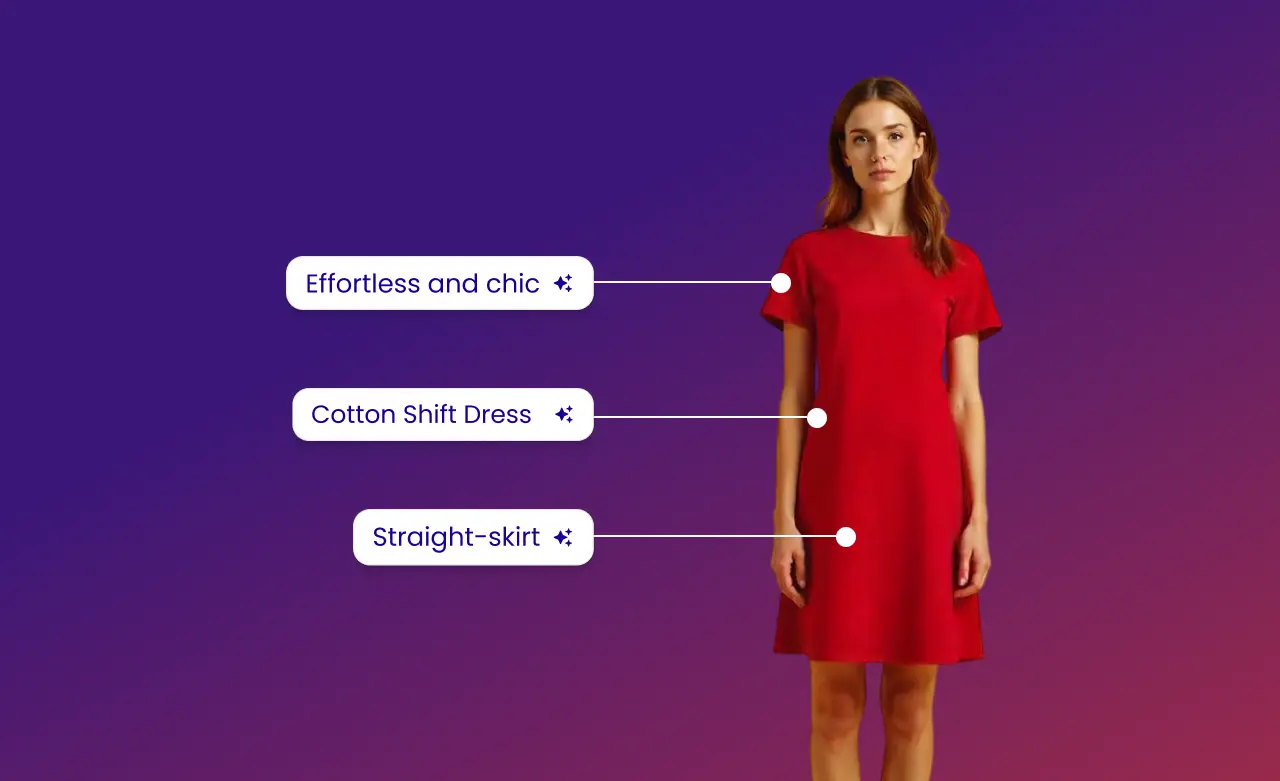
Unlocking the Power of Product Data Intelligence to Drive Discovery, Automation, and AI-Driven Commerce
In fashion retail, discovery has always been visual.
Today, it is also structural.
As commerce becomes increasingly AI-driven, product data has evolved from operational necessity to strategic infrastructure. Search engines, filters, recommendation systems, marketplaces, and emerging AI agents do not interpret storytelling the way humans do. They rely on structured, machine-readable product data.
This guide explores why Product Data Intelligence is now foundational for fashion brands and retailers, and how it powers discovery, merchandising, marketing, and future-ready commerce.
Product Data Is the New Storefront
In physical retail, storefront placement determines visibility.
In digital commerce, structured product data determines visibility.
Every product’s attributes, category, color, material, silhouette, fit, occasion, seasonality, shape how it appears in search results, filters, recommendations, and AI-driven systems.
When product data is search results, filters, recommendations:
- Filters break
- Onsite search degrades
- SEO performance declines
- AI-driven recommendations weaken
- Marketplaces misclassify products
- Machine-mediated discovery skips them entirely
Product data is no longer back-office support.
It is commercial infrastructure.
The Missing Infrastructure Layer in Fashion Commerce
Fashion brands and retailers already operate within complex technology ecosystems. Product images are created. PIM and PLM systems store information. E-commerce platforms publish catalogs. Marketing systems distribute campaigns.
Yet product discovery still underperforms.
The reason is structural.
Between visual assets and commerce systems, there is often no intelligence layer transforming images and existing inputs into structured, machine-readable product data.
PIM systems serve as systems of record. They store and distribute data.
Search engines index available attributes.
AI-driven systems rely on what they are given.
But none of these systems generate structured product truth directly from product images. None resolve inconsistencies at scale. None create standardized, fashion-specific attributes when supplier data is incomplete or inaccurate.
This is the gap in modern fashion commerce.
Pixyle.ai is the Product Data Intelligence Layer for Fashion Retail.
It transforms product images and existing inputs into rich, structured, reusable, machine-readable product data that powers discovery, automation, and AI-driven commerce across your entire technology stack.
Without this layer, systems operate on fragmented or inconsistent product data.
With it, every downstream system performs better.
Why AI Requires Structured Fashion Product Data
AI does not understand aesthetics.
It understands structure.
A human shopper can instantly recognize:
- A minimalist silhouette
- A relaxed fit
- A premium finish
Machines cannot, unless these characteristics are clearly defined through standardized attributes.
AI-driven systems require:
- Consistent taxonomy
- Standardized attribute mapping
- Clear product categorization
- Machine-readable formatting
Without this structure, AI systems cannot reliably:
- Rank products
- Recommend alternatives
- Compare similar items
- Surface relevant options
Product Data Intelligence ensures that every product is interpretable by machines, not just visually appealing to humans.
Machine Visibility: The New Discovery Metric
In the AI era, brands must optimize not only for customer visibility, but for machine visibility.
Discovery increasingly begins with:
- AI-powered search
- Recommendation engines
- Conversational commerce
- Marketplace algorithms
- Generative and agentic systems
If a product lacks structured, unambiguous attributes, it becomes invisible to these systems.
Strong imagery is not enough.
Creative storytelling is not enough.
Structured product data determines eligibility.
Product Data Intelligence enables machine visibility at scale.
A System of Intelligence, Not a System of Record
PIM and PLM systems are essential, but they are not intelligent.
They:
- Store attributes
- Govern workflows
- Distribute product data
They do not:
- Extract attributes directly from images
- Correct inconsistent supplier data
- Enrich missing fashion-specific attributes
- Adapt data for AI-driven discovery
Pixyle.ai operates as a system of intelligence, not a system of record.
It complements PIMs by feeding them structured product truth, generated through visual AI and fashion-specific taxonomy, that downstream systems can reliably use.
Establishing a Single Product Truth
Fashion product data often exists in multiple versions:
- Supplier spreadsheets
- Internal PIM records
- Marketplace adaptations
- Marketing descriptions
Inconsistent definitions create friction across teams and systems.
Pixyle.ai establishes a structured, image-derived product truth, a standardized attribute foundation that powers:
- Search and filtering
- SEO and GEO optimization
- Title and description generation
- Accessibility through accurate alt-text
- Marketplace and wholesale adaptation
- AI-agent readiness
When product truth is unified, the entire commerce ecosystem performs more efficiently.
How Product Data Intelligence Powers Teams
SEO & GEO Teams
Structured, machine-readable product data improves schema markup, search ranking, localization, and marketplace performance.
Growth & Marketing Teams
Standardized attributes enable accurate segmentation, personalization, and automated campaign generation.
Digital Merchandising
Structured data improves filter logic, cross-sell recommendations, assortment analysis, and trend detection.
Buying Teams
Data-driven attributes support demand forecasting and smarter inventory decisions.
E-Commerce & PIM Teams
Automated enrichment reduces manual work, ensures consistency, and improves catalog scalability.
When product data is intelligent, every team works faster, and with greater precision.
From Intelligence to Automation
Once product data becomes structured and reusable, automation follows naturally.
Product Data Intelligence powers:
- Automatic attribute tagging
- Title and description generation
- Accessibility-compliant alt-text
- Marketplace-ready feeds
- Wholesale product adaptation
- AI-ready content structuring
Structured attributes become the foundation from which all product content flows.
Preparing for AI-Driven and Agentic Commerce
Commerce is shifting from human-only navigation to machine-mediated decision-making.
AI agents and generative systems increasingly:
- Surface products
- Compare specifications
- Summarize features
- Recommend purchases
These systems do not browse image grids.
They parse structured data.
Brands that invest in machine-readable product data today position themselves for:
- Conversational commerce
- AI-driven product comparison
- Autonomous buying flows
- Intelligent search ecosystems
Product Data Intelligence is the foundation of this transition.
The Category: Product Data Intelligence for Fashion Retail
Pixyle.ai defines a new category:
The Product Data Intelligence Layer for Fashion Retail.
Not a PIM.
Not simple enrichment.
Not a content generator.
Pixyle transforms fashion images into structured, AI-ready product data, powering discovery, automation, and the future of retail.
Conclusion: Discovery Starts With Data
In the AI era, fashion brands do not compete on catalogs alone.
They compete on how well their products are understood by machines.
Structured product data determines:
- Visibility
- Discoverability
- Comparability
- Automation
- AI-readiness
Pixyle.ai ensures your products are not only beautifully presented, but clearly interpretable by the systems that drive modern commerce.
Because when machines decide what gets surfaced, product data is the storefront.
More guides
Lorem ipsum dolor sit amet, consectetur adipiscing elit.

