2026 Wedding Season Trends: Can Your Fashion Products Be Found?

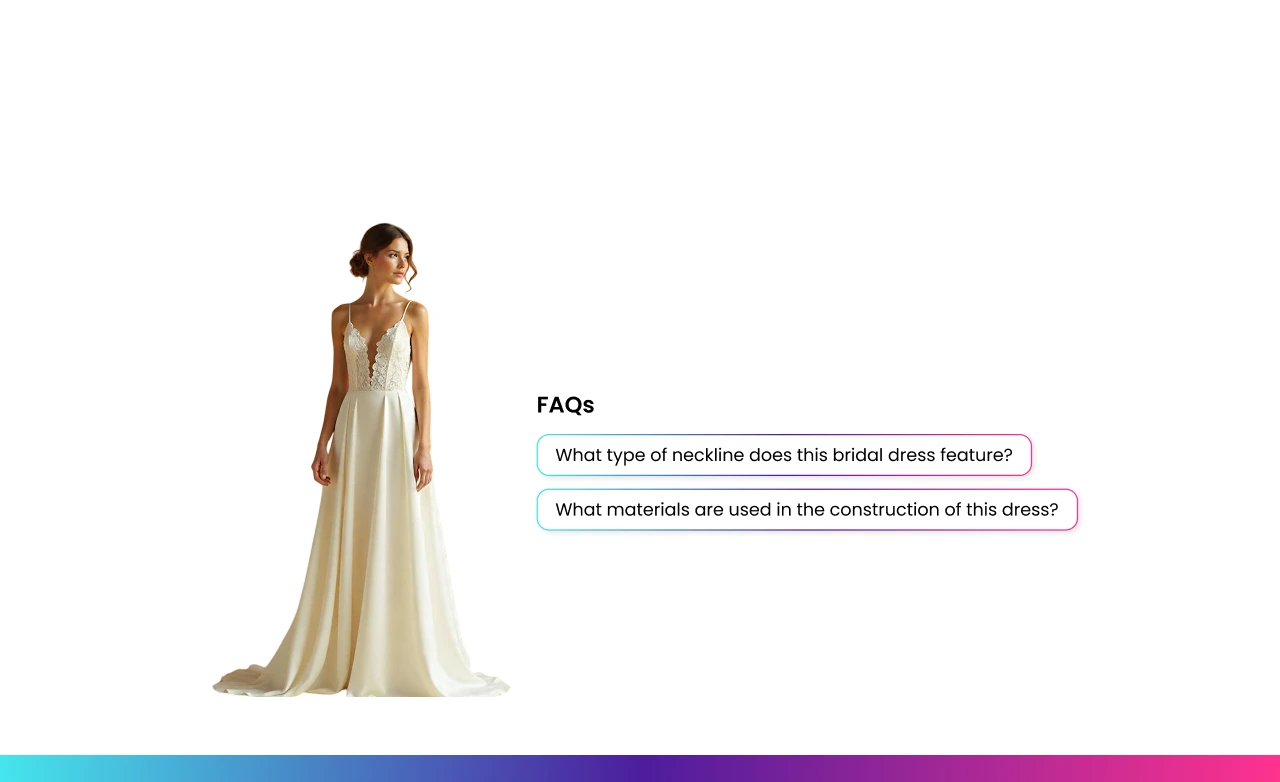
Vogue Business has highlighted the defining wedding season trends for 2026, and the direction is unmistakable. Bridal fashion is becoming more intentional, more expressive, and far less bound by tradition.
Weddings are shifting away from uniform aesthetics and toward highly personal, visually driven expressions of identity. From alternative bridal styling to vintage sourcing and layered accessories, the idea of a single “bridal look” is dissolving.
But beneath these cultural shifts, there is a more urgent reality for fashion brands and retailers.
In an AI-driven eCommerce environment, the real question is no longer what is trending. It is whether your products can actually be found.
Because in modern product discovery, visibility is no longer guaranteed by having the right product. It depends entirely on whether that product can be understood by machines.
Search has already changed
The way consumers search for fashion today no longer resembles traditional eCommerce behavior.
People are not browsing through categories like “bridal gowns” or “wedding accessories” in a structured way. Instead, they are expressing intent through highly specific, aesthetic-driven language.
Searches like “celestial whimsigoth,” “red veil wedding,” “black gothic wedding dress,” “alt wedding rings,” “cape veil wedding,” “wedding cape dress,” and “wedding dress with bolero” are becoming increasingly common.
These are not conventional keywords. They are visual, emotional, and cultural signals of intent.
They reflect how fashion is actually being discovered now, not through categories, but through aesthetics, identity, and mood.
This marks a fundamental shift in product discovery. Search is no longer category-first. It is intent-first and attribute-driven.
AI has fundamentally changed product discovery
The reason this shift matters so much is because discovery is no longer purely human-led.
Increasingly, AI systems, recommendation engines, and generative search interfaces are mediating what gets surfaced and what does not.
But these systems do not interpret fashion the way humans do. They do not understand styling intent, moodboards, or editorial direction unless that meaning is translated into structured product data. They rely on attributes, tags, metadata, and consistent structure to make sense of what a product actually is.
When that structure is missing or incomplete, even highly relevant products fail to appear in search results. Not because they are wrong for the query, but because they are invisible to the system interpreting it.
The real disconnect: how products exist vs how people search
Most fashion eCommerce systems are still built on outdated foundations.
Products are categorized according to internal logic. Attributes are often incomplete or inconsistent. Descriptions are manually written and rarely aligned with real search language. And visual information is not fully translated into structured data.
Meanwhile, consumers are searching in entirely different ways.
They think in terms of aesthetics, silhouettes, materials, layering, and emotional styling references, not static categories.
This creates a growing gap between how products are stored internally and how they are actually discovered externally.
And in an AI-driven environment, that gap becomes a visibility problem.
2026 wedding trends expose this shift clearly
The 2026 wedding season makes this evolution especially visible.
Bridal fashion is no longer defined by a single silhouette or traditional framework. Instead, it is shaped by alternative and indie aesthetics, gothic and dark romantic styling, editorial-level beauty direction, vintage and archival sourcing, and highly modular styling choices involving capes, veils, boleros, and layered accessories.
These are not just design directions. They are discoverability signals.
Each of these styles maps directly to how consumers are now searching for products. But they only become searchable if they exist as structured attributes within product data.
Without that structure, even perfectly aligned products remain undiscoverable.
Why visibility is no longer guaranteed
There is a simple but uncomfortable truth in modern ecommerce.
A product can perfectly match a trend and still not appear in search results.
If it is not tagged correctly, if its attributes are incomplete, or if its description does not reflect how people actually search, it effectively does not exist in discovery systems.
In AI-mediated commerce, visibility is no longer about inventory or merchandising alone. It is about whether machines can interpret your products correctly.
And machines only understand structure.
Product data has become the discovery layer
This is where the biggest shift is happening in fashion eCommerce.
Product data is no longer just backend infrastructure used for organization. It has become the foundation of visibility across search, SEO, GEO, filtering, and AI-driven discovery.
To stay competitive, brands need product data that reflects real-world search behavior, captures detailed visual attributes, and remains consistent across the entire catalog.
Without that, discovery breaks, not because demand is missing, but because interpretation is.
From internal merchandising to external discovery
Before the next peak season, fashion brands need to rethink how they structure their catalogs.
The question is no longer how products are organised internally. It is whether they are structured for how customers actually search externally. Because in an AI-driven discovery environment, internal taxonomy does not determine visibility.
External interpretation does.
Pixyle AI perspective
Fashion is becoming more expressive, fragmented, and visually driven, while discovery is becoming more intelligent, automated, and AI-mediated.
In this environment, products are no longer surfaced based on categories or manual curation alone. They are surfaced based on whether machines can interpret and connect them to real-world intent.
This creates a growing challenge for fashion brands. Product data is often incomplete, inconsistent, and disconnected from how people actually search. As discovery becomes more intelligent, this gap directly impacts visibility, traffic, and conversion.
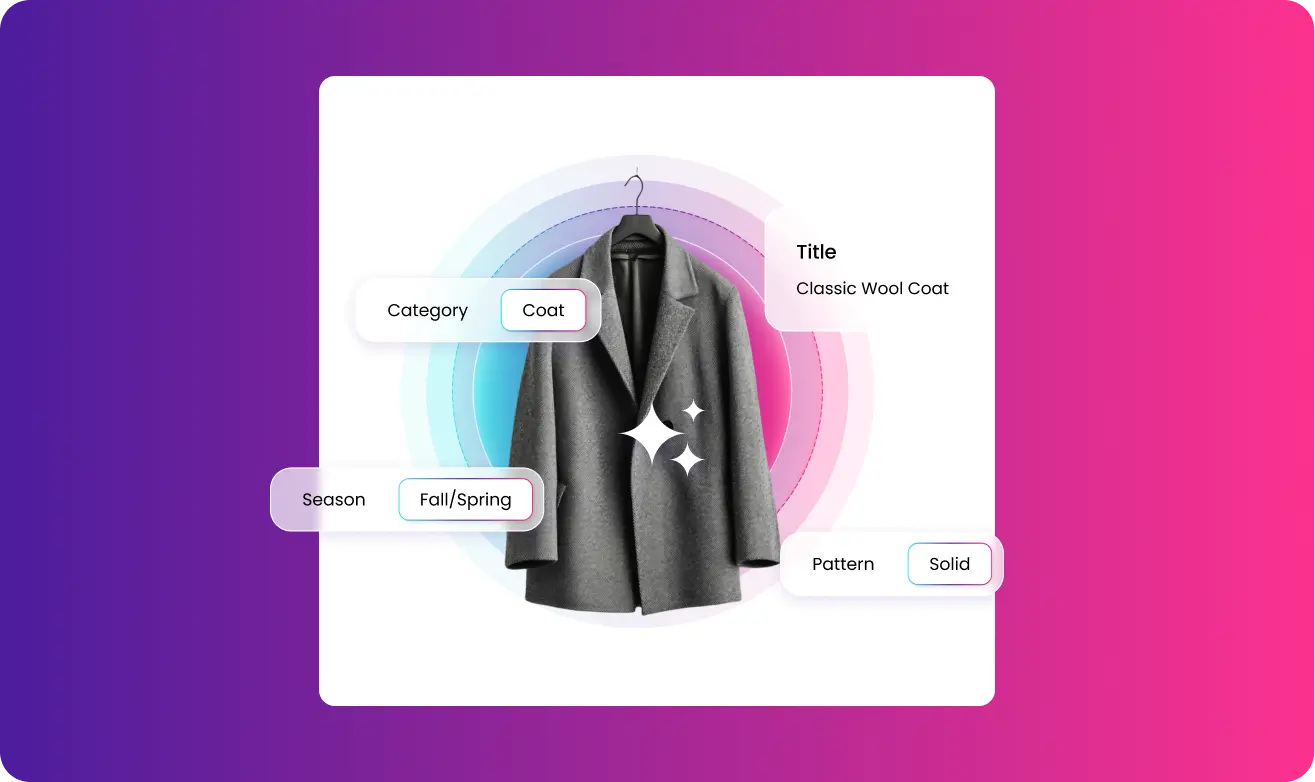
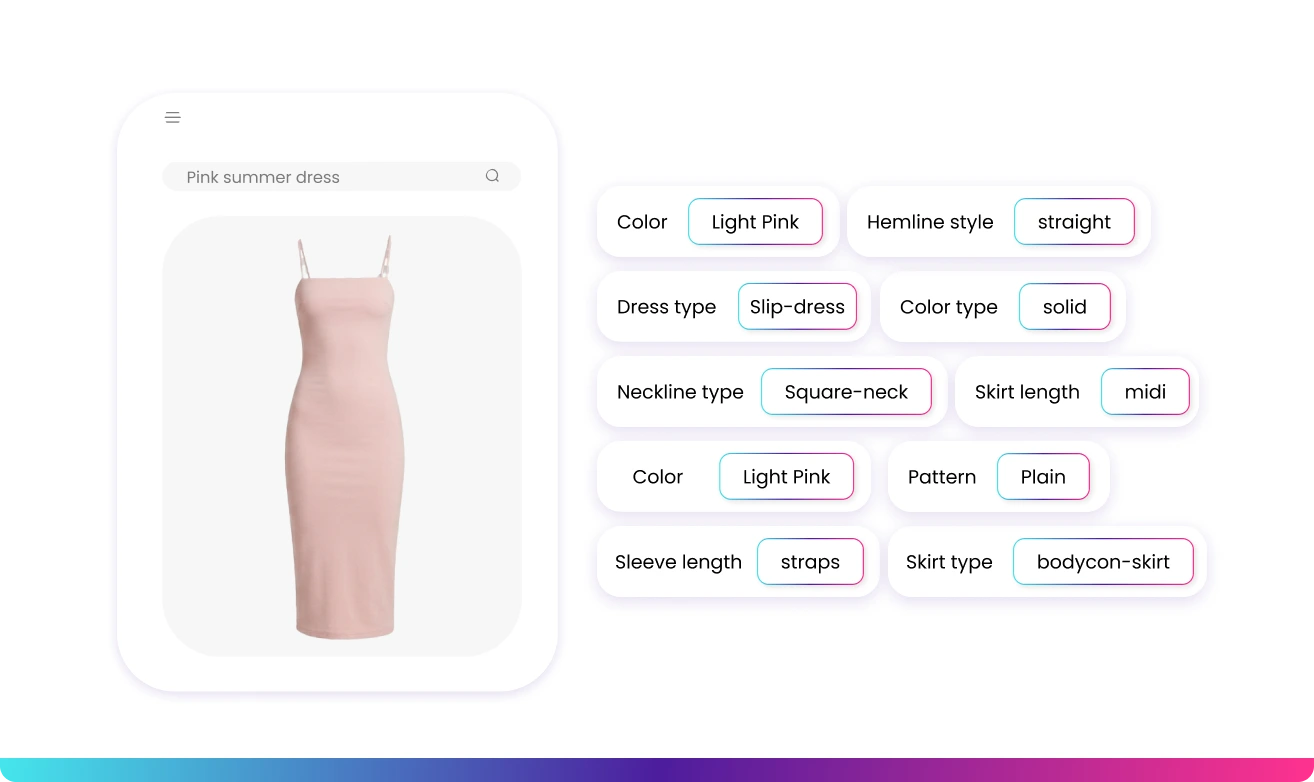
We solve this by transforming product images into structured, machine-readable product data.
By extracting detailed visual attributes and converting them into consistent, scalable product intelligence, Pixyle AI enables fashion brands to align their catalogs with real search behavior, from niche aesthetics to complex styling signals.
This structured data powers search, SEO, filtering, and AI-driven discovery, ensuring products are not just listed, but actually found.
As fashion discovery continues to evolve, the advantage will not come from following trends alone, but from structuring product data to be discoverable within them.
Pixyle AI is the visual product data intelligence layer that makes that possible.
Discover Pixyle Ultimate Dress type Taxonomy Guide
Learn how to structure your catalog in a way that matches how people actually shop.


Boost your sales with AI product tagging
Optimize your eCommerce catalog to improve discovery and conversions.
Related posts
Stay updated with our latest blog posts.