Top 5 Common Product Data Mistakes in AI era: How Pixyle AI fixes them


In today’s AI-driven eCommerce landscape, product data is no longer just operational, it’s foundational.
Search engines, recommendation systems, and AI agents are now responsible for what gets discovered, compared, and purchased. And unlike humans, they don’t interpret visuals or creative storytelling.
They rely on structured, consistent, machine-readable product data.
For fashion brands and retailers, this creates a new challenge: many existing product data practices were never designed for machines.
Here are the five most common product data mistakes, and why they’re holding back your visibility, performance, and growth.
1. Incomplete Product Attributes
One of the most critical issues in product attributes fashion ecommerce is simply missing data.
Key attributes like color, size, material, fit, and category are often incomplete or inconsistently filled across catalogs.
Why this matters
Incomplete attributes directly impact product data quality metrics, especially completeness scores.
When attributes are missing, filters don’t work properly, search relevance drops, and products are excluded from results.
In an AI context, missing data means missing visibility. If a system cannot fully understand a product, it is less likely to surface it.
2. Inconsistent Attribute Naming
A common but damaging issue is inconsistent naming conventions.
For example, “Navy” vs “Dark Blue” vs “Midnight,” or “Slim fit” vs “Tailored fit.”
Why this matters
This breaks product data consistency ecommerce and creates fragmentation across your catalog.
As a result, filters become unreliable, similar products don’t group together, and search results become inconsistent.
AI systems depend on standardised taxonomy and attributes. Without consistency, they struggle to interpret meaning and relationships between products.
3. Unstructured Product Data (Hidden in Text)
Many fashion catalogs rely heavily on descriptive text rather than structured fields.
For example, “Soft cotton slim-fit shirt” without structured tags for material or fit, or variants like size and color embedded in descriptions.
Why this matters
This violates the principles of structured product data ecommerce.AI systems do not extract meaning from text the same way humans do. They rely on clearly defined attributes, structured formats, and machine-readable data.
When data is buried in text, it cannot power filters, it cannot support AI search, and it limits discoverability across platforms.
4. Conflicting or Duplicate Product Information
Another common issue is inconsistency across product fields.
Titles say one thing while attributes say another, duplicate or overlapping values exist, and variants are incorrectly defined.
Why this matters
This reduces trust in your data.
For AI systems, conflicting information creates uncertainty. And when confidence drops, rankings drop, visibility decreases, and products are less likely to appear in recommendations or comparisons.
Consistency across all product fields is essential for both machines and users.
5. Manual, Unscalable Data Enrichment
Many brands still rely on manual processes to create and maintain product data.
This leads to slow workflows, high operational costs, human error, and limited scalability.
Why this matters
Improving product data quality metrics requires continuous updates and scale.
In the AI era, product data must be continuously enriched, standardised across systems, and updated in real time.
Manual processes simply cannot keep up with the volume and complexity of modern fashion catalogs.
The Bigger Shift: From Storefronts to Structured Data
Commerce is moving from human browsing to AI-mediated discovery.
AI systems interpret structured attributes, compare products automatically, and generate results, feeds, and recommendations.
This means your product data is now your primary interface with machines.
If it’s not complete, consistent, and structured, your products won’t be surfaced, no matter how strong your brand or visuals are.
From Data Problems to Data Intelligence
These challenges are not just operational inefficiencies, they are structural limitations.
To compete in AI-driven commerce, brands need to move beyond:
- Manual enrichment
- Fragmented data systems
- Text-first product understanding
They need a new approach built around product data intelligence.
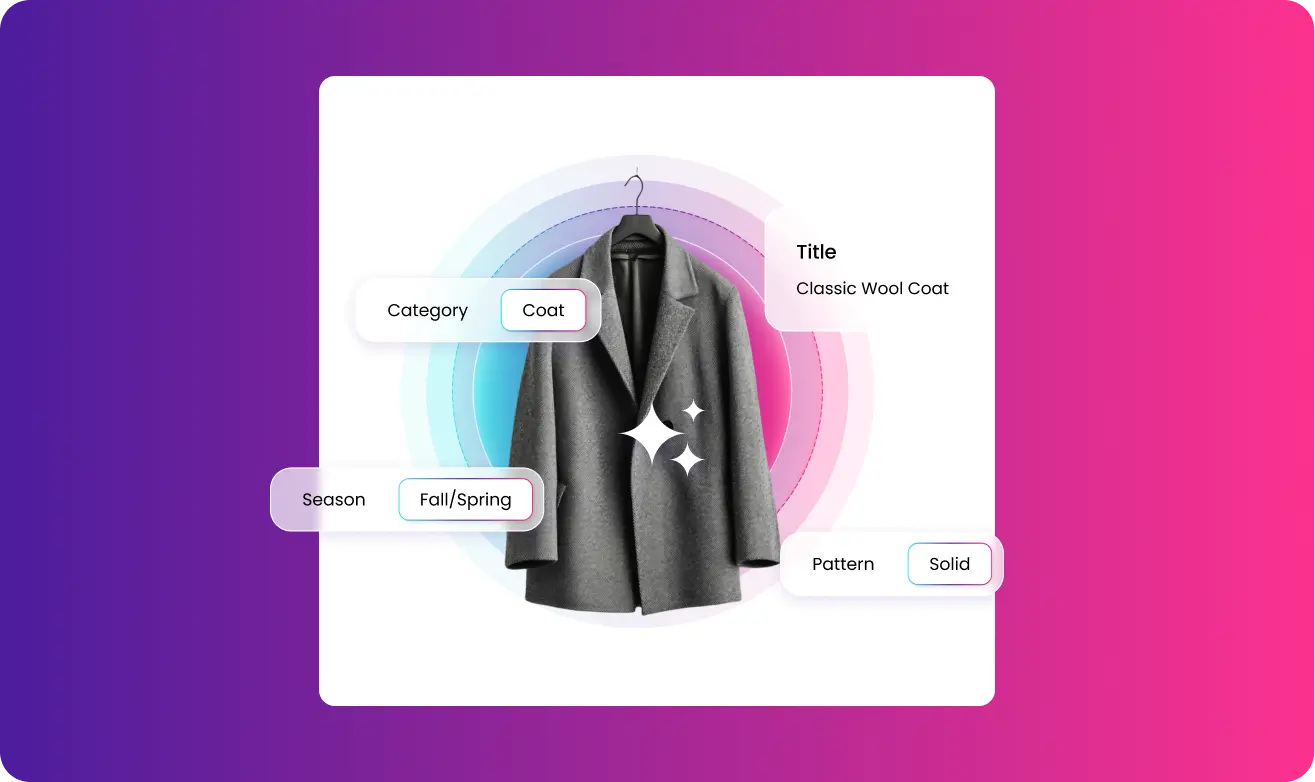
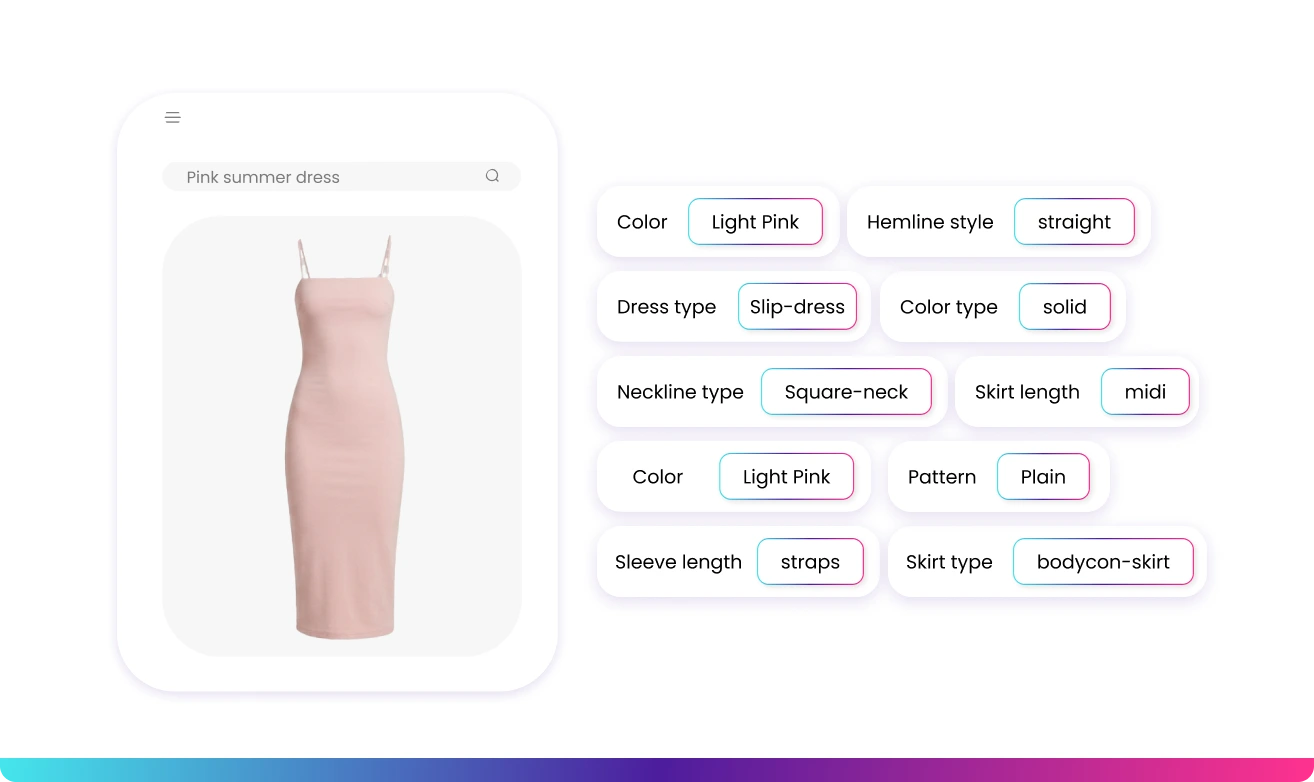
This means extracting accurate attributes directly from product images, standardising taxonomy and naming across the entire catalog, and structuring data so it is machine-readable and reusable. It also requires enriching product data at scale rather than manually, while creating a consistent and reliable “product truth” across all systems. This is exactly where Pixyle AI fits in.
As a visual product data intelligence layer built for fashion retail, Pixyle AI’s platform transforms product images and existing inputs into structured, AI-ready data that powers:
- Discovery across search filters, and AI systems
- High-quality product attributes at scale
- Automated content generation
- Consistency across PIMs, feeds, and storefronts
- Readiness for AI agents and machine-driven commerce
In the AI era, success doesn’t start with better content, It starts with better product data.
Because if machines can’t understand your products, they simply won’t show them.
Book your call and see Pixyle AI in action.
Discover Pixyle Ultimate Dress type Taxonomy Guide
Learn how to structure your catalog in a way that matches how people actually shop.


Boost your sales with AI product tagging
Optimize your eCommerce catalog to improve discovery and conversions.
Related posts
Stay updated with our latest blog posts.