December is the most decisive month of the year for fashion eCommerce. It's the peak of holiday shopping trends, a time when traffic spikes, demand surges, and shoppers arrive with stronger purchase intent than at any other point in the calendar.
But surging demand doesn't automatically translate into sales. It only converts when your products appear for the searches shoppers are actually making right now.
This is where understanding December fashion keywords becomes mission-critical. Every year, specific high-intent terms dominate gifting, winter dressing, partywear, and New Year's Eve looks. If your product titles and descriptions don't reflect those terms accurately and consistently, your items simply won't show up, neither in on-site search nor on Google. Consider that 43% of retail customers head directly to the search bar when they land on a website, yet many brands still overlook the precision of their product data.
In this article, we'll break down what shoppers search for in December fashion, which winter fashion search terms and seasonal categories matter most, and, most importantly, how to optimize product data for holiday search so your brand captures demand when it's at its highest.
Gifting Season: The Keywords That Signal Immediate Purchase Intent
December gifting peaks from Black Friday through the final shipping days before Christmas. These weeks bring short-journey shoppers: they know what they want, and they intend to buy fast.
High-Intent Fashion Keywords for Gifting
Across fashion categories, shoppers tend to search for:
- “gifts for her / fashion gifts for him”
- “cozy gifts”
- “luxury gifts”
- “winter accessories gift set”
- “cashmere gifts”
- “festive knitwear gifts”
- “pajama sets for gifting”
- “stocking stuffers fashion”
These gifting season keywords are highly transactional: if your product fits the intent, but your title or description never mentions “gift,” “set,” “accessories,” or “cozy”-your item won’t surface.
Why precise product data matters
A shopper searching “cashmere scarf gift set” will not see your product if you only tag:
- Title: “Wool Scarf”
- Description: “Soft winter scarf.”
The intent words-gift set, cashmere, holiday, cozy, are missing. Even if your item is perfect for gifting, your product data hides it.
Winter Essentials: The Seasonal Workhorses powering December Fashion Keywords
As temperatures drop, searches around winter essentials intensify. These “practical” searches carry enormous demand volume and map closely to specific attributes,fabric, warmth level, length, insulation, and weather suitability.
Top Winter Fashion Keywords for eCommerce Brands
Some of the most common winter fashion search terms include:
- “thermal leggings”
- “fleece-lined tights”
- “waterproof winter boots”
- “wool coat”
- “puffer jacket”
- “long padded coat”
- “turtleneck sweater”
- “knit balaclava”
Shoppers also get descriptive when searching for winter layers:
- “oversized cream turtleneck”
- “black long wool coat”
- “short quilted jacket”
Attribute-rich titles & descriptions win
If your description lacks the attributes shoppers explicitly search for—length, material, lining, warmth, your visibility suffers on both your own platform and external search engines.
For example:
- “Puffer Jacket”
vs. - “Long Waterproof Puffer Jacket with Hood—Thermal Lined”
The second version naturally captures multiple winter fashion search terms, without keyword stuffing, and dramatically improves discoverability.
Partywear Peaks: The December Search Wave that Fashion Brands Can’t Ignore
Holiday parties, corporate events, and family gatherings fuel a massive spike in party outfit trends throughout December.
Shoppers search with clear style intent-fabrics, colors, embellishments, fits, especially between the 1st and the 24th.
Partywear-related December Fashion Keywords
Expect searches around:
- “sequin dress”
- “velvet dress”
- “metallic skirt”
- “holiday party outfit”
- “satin blouse”
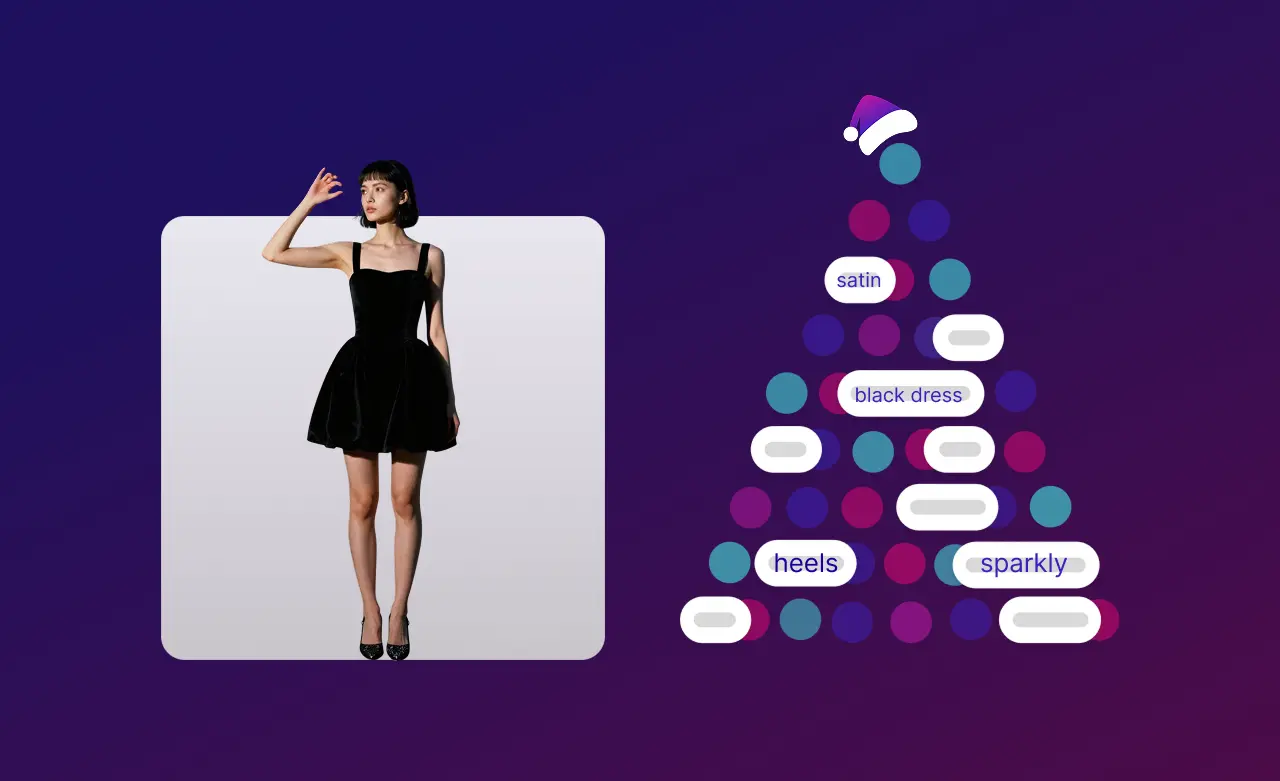
- “little black dress”
- “sparkly heels”
- “festive red outfit”
Accessories also surge:
- “statement earrings”
- “embellished clutch bag”
The power of descriptive product data
Fashion shoppers rarely search generically during party season. They search for a look.
Titles like:
- “Dress”
or - “Holiday Dress Collection” doesn't match the intent.
Shoppers want:
- sequin mini dress
- backless velvet maxi dress
- silver metallic pleated skirt
Your product data should reflect actual visual attributes to match these high-intent searches.
New Year’s Eve: The Highest-Intent Party Fashion Searches of the Year
The last week of December brings another micro-spike: New Year’s Eve fashion searches. These are narrower, glitzier, and even more time-sensitive than Christmas partywear trends.
Common NYE search terms include:
- “New Year’s Eve dress”
- “NYE outfit ideas”
- “sparkly jumpsuit”
- “metallic mini dress”
- “2025 party dress”
- “silver sequin dress”
- “2025 glitter heels”
These are purchase-intent keywords: shoppers searching them are typically ready to buy now.
Why brands often miss out
If your product description doesn’t include:
- the correct fabric
- the correct style type
- the correct occasion tag
- accurate details like neckline, sleeve, hem, or embellishment
…you fall off the funnel entirely.
This is why grounding product data in the actual unique attributes of the item, not guesswork or generic descriptions, is essential for ranking in seasonal product discovery.
Why Accurate, Attribute-Rich Product Data Is the Real Driver of Holiday Conversions
It’s tempting to think that December success comes down to marketing or promo calendars. But in reality, the foundation of all holiday discoverability, across SEO, paid campaigns, marketplace search, and on-site filtering, is the quality of your product data.
Bad data creates invisible products.
Strong data surfaces the right product to the right shopper at the right moment.
The biggest discoverability failures we see in fashion eCommerce:
- Missing color terms (“beige” tagged as “brown”)
- Omitted fabrics (failing to mention velvet, satin, wool)
- Incorrect silhouettes (a “mini dress” mislabeled as “knee-length”)
- No mention of seasonal use (e.g., “party dress,” “winter coat”)
- Lack of occasion tags (“NYE,” “holiday party,” “gifts”)
- Overly vague titles (“Women’s Jacket”)
When your product data doesn’t match shopper language, your products lose the race for visibility, no matter how beautiful, trendy, or competitively priced they are.
How to Optimize Product Data for Holiday Search
Here are practical steps fashion brands should take in December:
1. Add seasonal context
Not in a spammy way, but if a product is genuinely suited to giftingdescri or partywear, say so.
2. Enrich attributes with real visual detail
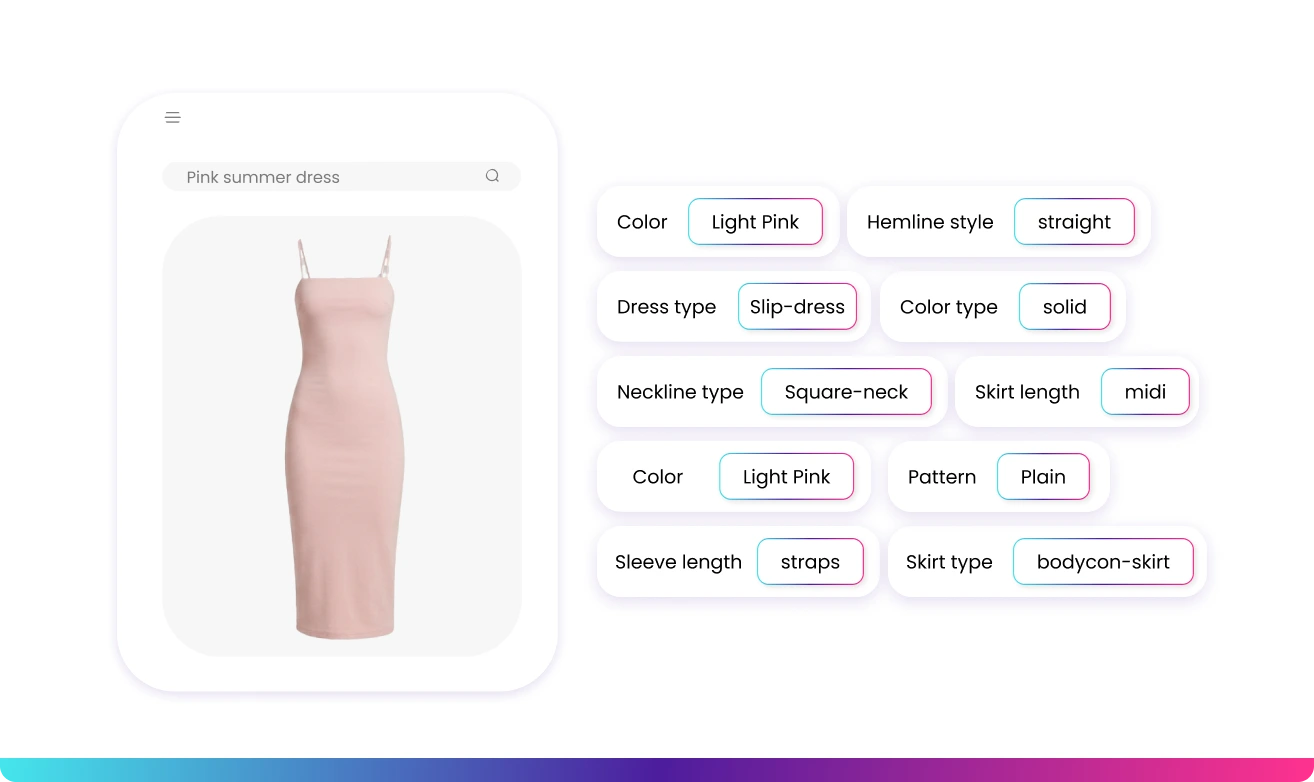
Include silhouette, cut, neckline, pattern, fabric, embellishment, hemline, and fit.
3. Use shopper vocabulary
Align descriptions with what people actually type:
“puffer jacket,” “sequin mini dress,” “winter boots,” “oversized knit sweater.”
4. Ensure consistent terminology across your entire catalog
Inconsistent language confuses both shoppers and search engines.
5. Build titles that are clear, descriptive, and style-led
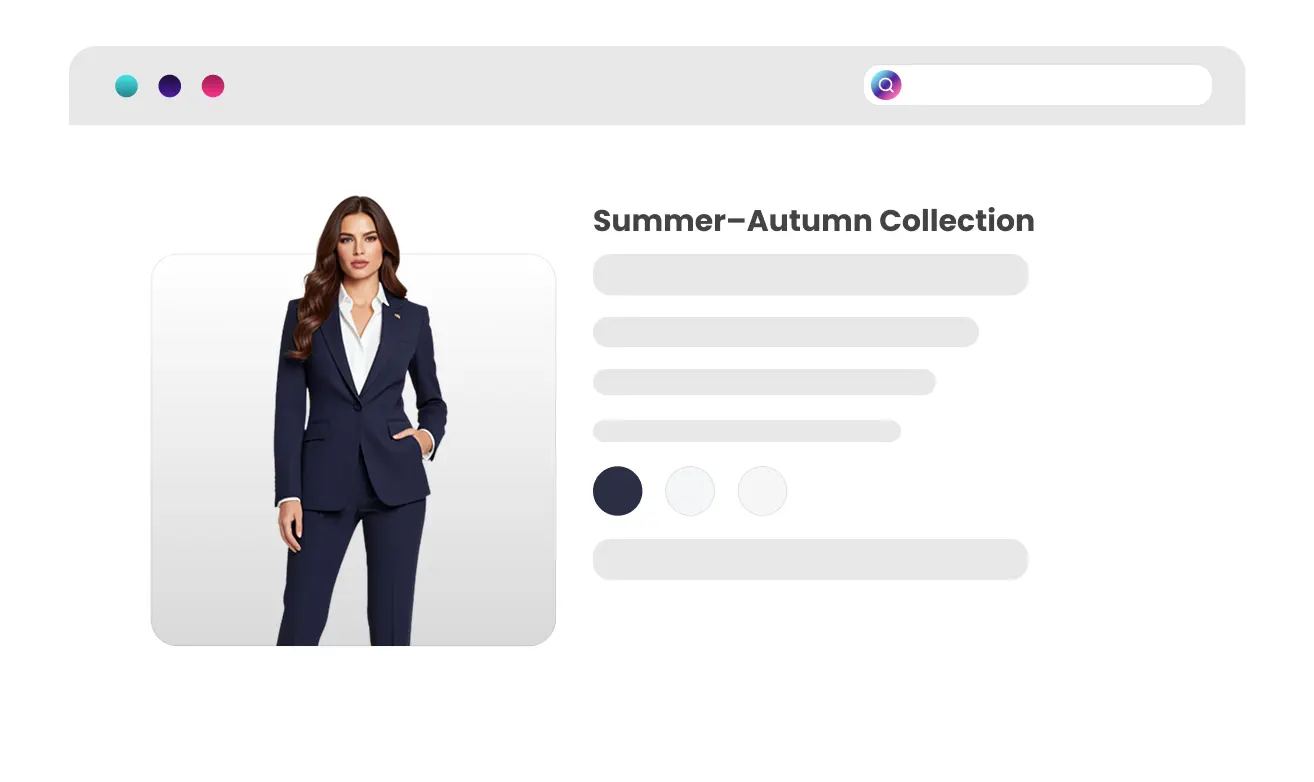
A great product title = category + fabric + key detail + color
Example:
“Black Velvet Wrap Dress with Long Sleeves”
6. Standardize data across all channels
Shopify, marketplaces, PIMs, and Google treat titles differently, consistency is non-negotiable.
How Pixyle.ai Helps Fashion Brands Win December Search Demand
All of the above is only possible with accurate, rich, scalable product data, something that’s nearly impossible to maintain manually during the busiest season of the year.
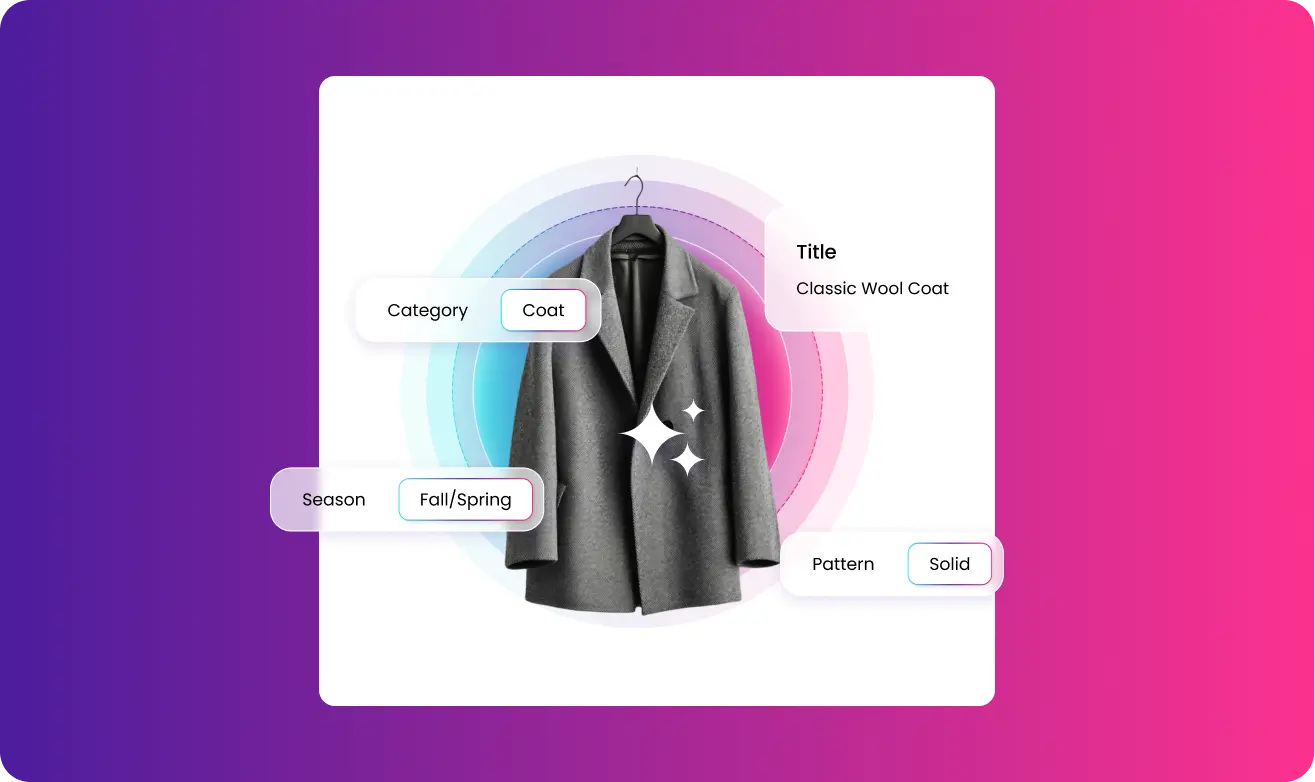
Pixyle.ai automatically identifies the visual attributes of every fashion item, fabric, fit, neckline, embellishment, pattern, length, color, and more, and transforms them into highly structured, consistent titles, descriptions, and tags.
This means your products naturally capture the December fashion keywords, gifting season keywords, party outfit trends, winter fashion search terms, and New Year’s Eve fashion searches shoppers use the most.
By enriching your catalog with high-intent fashion keywords grounded in true product understanding, Pixyle AI ensures your items appear in seasonal product discovery exactly when customers are looking for them, boosting visibility, conversions, and end-of-year revenue.
Discover Pixyle Ultimate Dress type Taxonomy Guide
Learn how to structure your catalog in a way that matches how people actually shop.


Boost your sales with AI product tagging
Optimize your eCommerce catalog to improve discovery and conversions.

Related posts
Stay updated with our latest blog posts.