Fashion Week FW26 marks a clear shift in how value is communicated in premium fashion. Beyond silhouettes and color stories, craftsmanship, texture, and material quality are taking center stage. From intricate stitching to tactile fabrics and layered finishes, the details are the storytelling.
But there's a growing disconnect.
While consumers respond emotionally to craft and texture, digital commerce systems don't interpret fashion the same way humans do. In premium fashion ecommerce, value doesn't translate unless it's clearly described, structured, and searchable.
The result? Exceptional products reduced to generic listings that flatten brand differentiation and limit visibility.
The demand is clear: 82% of customers want AI that reduces research time, and 55% expect personalized, tech-powered shopping. Yet without precise descriptions of texture, material, and craft, even sophisticated discovery tools can't surface what makes premium pieces exceptional.
For ecommerce, merchandising, and content teams, the real FW26 challenge isn't just showcasing craftsmanship, it's answering a critical question:
How do we describe texture, material, and craft in a way algorithms, and shoppers can understand?
Why Craftsmanship Gets Lost in Generic Fashion Product Descriptions
In premium fashion, a product’s perceived value lives in its details. A hand-finished seam, a unique fabric weave, or a subtle surface texture can define why an item commands a higher price.
Yet most fashion product descriptions fail to capture this.
Why? Because traditional content workflows rely on:
- Repetitive, high-level language
- Manual copywriting under tight timelines
- Inconsistent terminology across channels
From an algorithmic perspective, vague descriptions don’t perform. Search engines and AI-driven discovery systems prioritise:
- Specific material and construction details
- Consistent language across PDPs and marketplaces
- Depth that aligns with how consumers actually search
Without that depth, craftsmanship becomes invisible - both to shoppers and to discovery systems.
The Growing Importance of Texture and Fabric Description in FW26
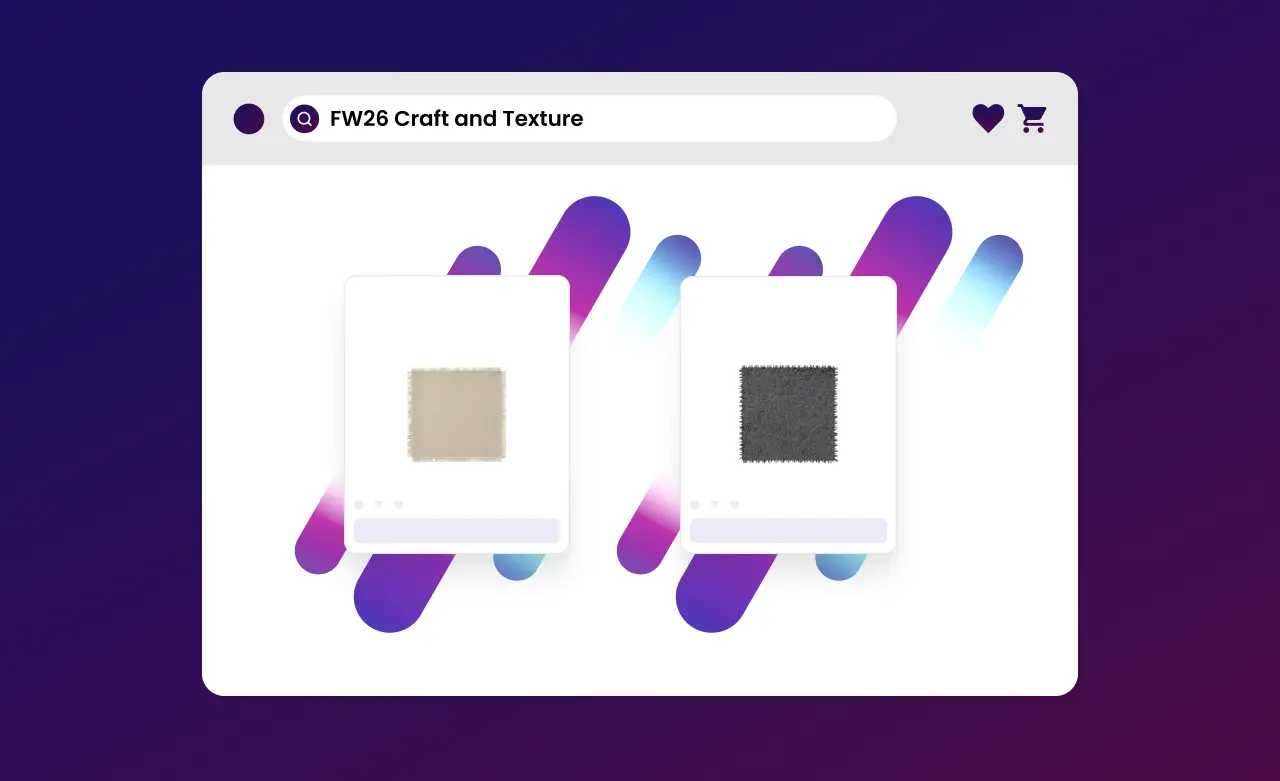
FW26 collections are rich with tactile cues: brushed wool, sheer layering, sculptural knits, intricate embroidery. These elements influence purchase decisions — but only if they’re communicated clearly online.
As search and recommendations evolve, texture and fabric description plays a growing role in:
- Long-tail search visibility
- PDP engagement and time-on-page
- Marketplace ranking and relevance
Shoppers don’t just search for “dress” anymore. They search for:
- “Textured woven midi dress”
- “Soft brushed wool blazer”
- “Structured cotton with visible stitching”
Capturing this intent requires more than creativity, it requires precision.
Why Manual Description Workflows Don’t Scale
Most fashion teams still rely on manual processes to describe complex products. This creates friction across the organization:
- Ecommerce teams struggle to launch collections fast enough
- Content teams fight inconsistency across PDPs and marketplaces
- Merchandising teams lack structured insight into product-level detail
Manual workflows make it difficult to scale nuanced descriptions across thousands of SKUs, especially during fast-moving seasons like FW26.
The more complex the product, the harder it becomes to maintain accuracy, consistency, and speed.
How AI Product Descriptions Capture Craft at Scale
This is where AI product descriptions change the game.
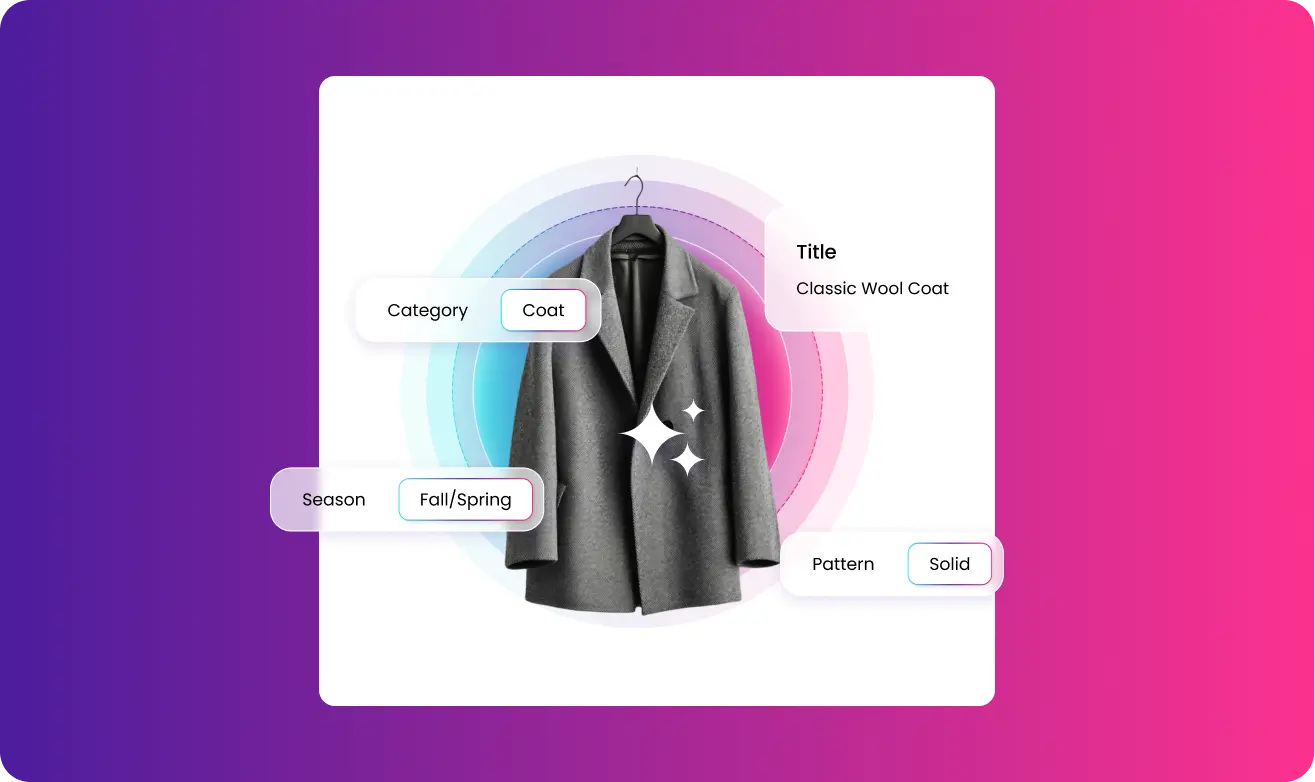
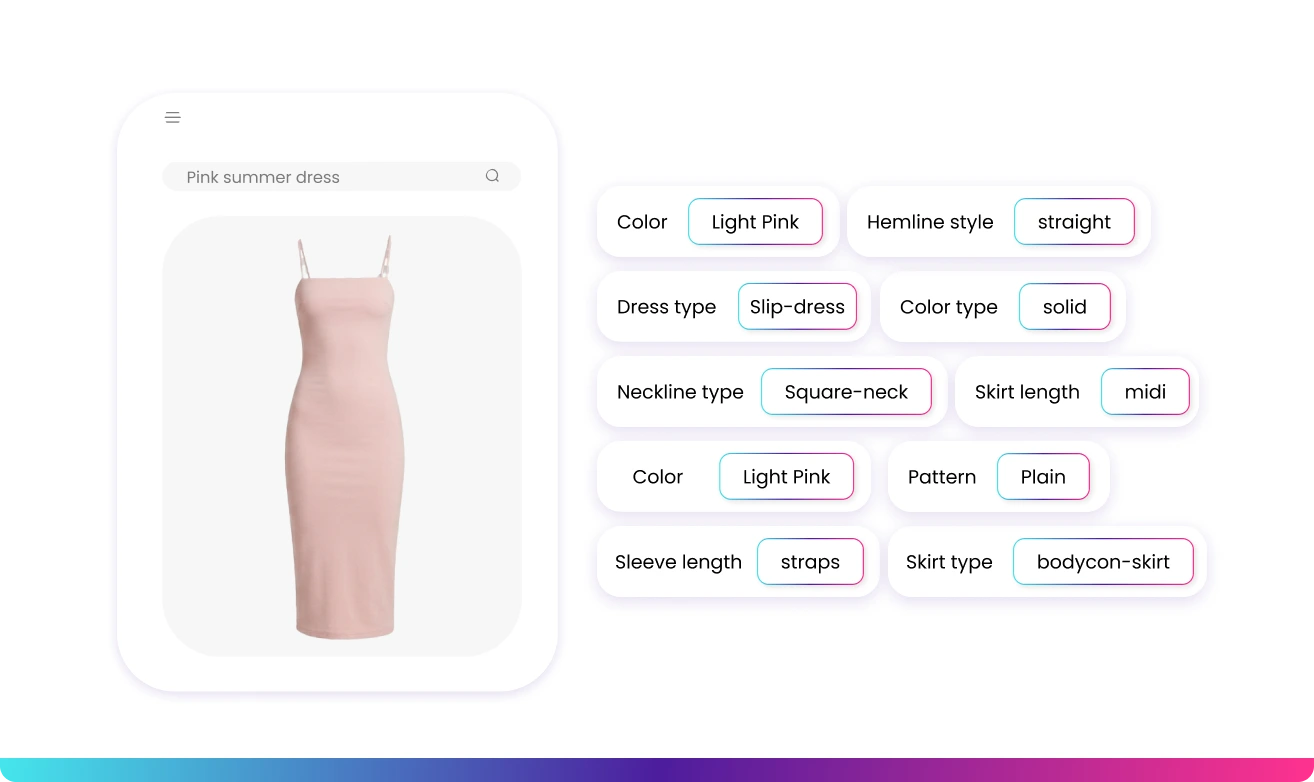
By analyzing product imagery, image-based AI tagging identifies visual and structural details that are often missed or oversimplified, from fabric texture and construction to subtle design features. These insights power descriptions that are:
- Rich in detail
- Aligned with consumer language
- Consistent across channels
- Optimized for SEO and AI discovery
Instead of flattening craftsmanship, AI makes it searchable.
Platforms like Pixyle.ai support this process by transforming visual product data into accurate, structured descriptions, helping brands describe fabric texture with AI while maintaining brand tone and precision.
The Fashion Industry Is Already Seeing Real Outcomes
The impact of smarter, AI-generated descriptions is measurable.
Thrifted, an online retailer of high-quality vintage men’s and women’s fashion from iconic 80s and 90s brands, faced growing complexity as their catalog scaled. Manual data input, complex spreadsheets for Shopify, and strict marketplace requirements slowed their workflows and limited consistency.
Since working with Pixyle.ai in 2023, Thrifted has used AI-powered tagging and image moderation to automatically enrich product listings with detailed attributes aligned to marketplace taxonomies. The result: scalable, accurate descriptions, and a 10× increase in eBay revenue, proving that richer product content directly improves discoverability and performance.
Why Description Depth Improves PDP Engagement
Detailed, accurate descriptions do more than help products get found, they help products sell.
When descriptions clearly communicate texture, structure, and material quality, shoppers:
- Understand the value faster
- Spend more time on PDPs
- Feel more confident purchasing premium items
This directly improves conversion, reduces returns, and strengthens brand perception.
By leveraging AI to support long-tail fashion keywords and consistent detail, brands improve PDP engagement without sacrificing speed or scale.
Turning Craftsmanship Into Discoverability and Conversion With Pixyle.ai
For FW26 and beyond, success in premium fashion ecommerce depends on how effectively craftsmanship is translated into language that both shoppers and algorithms can understand. Pixyle.ai helps brands do exactly that by transforming visual product details into AI-generated, structured descriptions at scale.
With Pixyle.ai, teams can:
- Capture intricate details like texture, fabric, and construction with accuracy
- Improve relevance for long-tail fashion keywords
- Scale premium storytelling consistently across large catalogs
- Optimize product visibility across search, PDPs, and marketplaces
Craft and texture define premium fashion, but only structured, descriptive product content makes that value discoverable online. FW26 won’t be won by aesthetics alone. It will be won by brands that turn craftsmanship into measurable discoverability, visibility, and conversion, powered by Pixyle.ai.
Discover Pixyle Ultimate Dress type Taxonomy Guide
Learn how to structure your catalog in a way that matches how people actually shop.


Boost your sales with AI product tagging
Optimize your eCommerce catalog to improve discovery and conversions.

Related posts
Stay updated with our latest blog posts.