Product Data Intelligence: The Missing Layer Between Images and eCommerce


Fashion is now a visual industry. Every day, brands create thousands of product images across photoshoots, campaigns, lookbooks, and marketplaces. These visuals inspire customers and shape brand identity, but on their own, they don't drive commerce.
In today's eCommerce ecosystem, images are only the starting point. Maybe humans can instantly understand a product by looking at it but search engines, recommendation systems, and LLM-driven interfaces cannot.
Product data is your new storefront.
Research shows 87% of customers say product content is the most important factor when deciding to purchase an item online. If algorithms can't read, understand, and classify your products, customers will never see them.
The real challenge is no longer content volume. It's this:
How do we turn images into machine-readable product data that algorithms can discover, rank, and sell?
Why Images Alone Don’t Convert Into Commerce
Humans shop visually. Algorithms operate on structure.
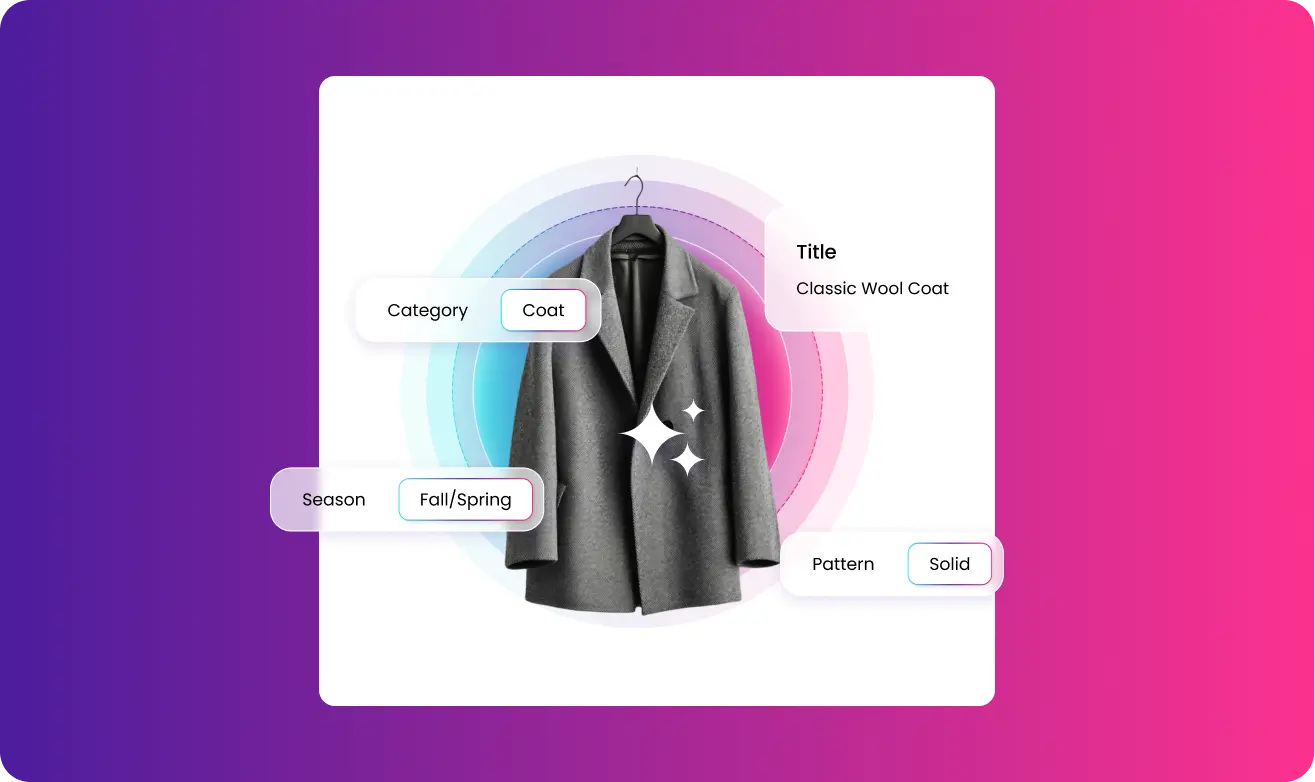
A single product image may clearly show a cropped leather jacket with a boxy fit, silver hardware, and a matte finish. But unless that information exists as structured, readable product data, platforms can’t surface it correctly.
Modern discovery engines prioritize:
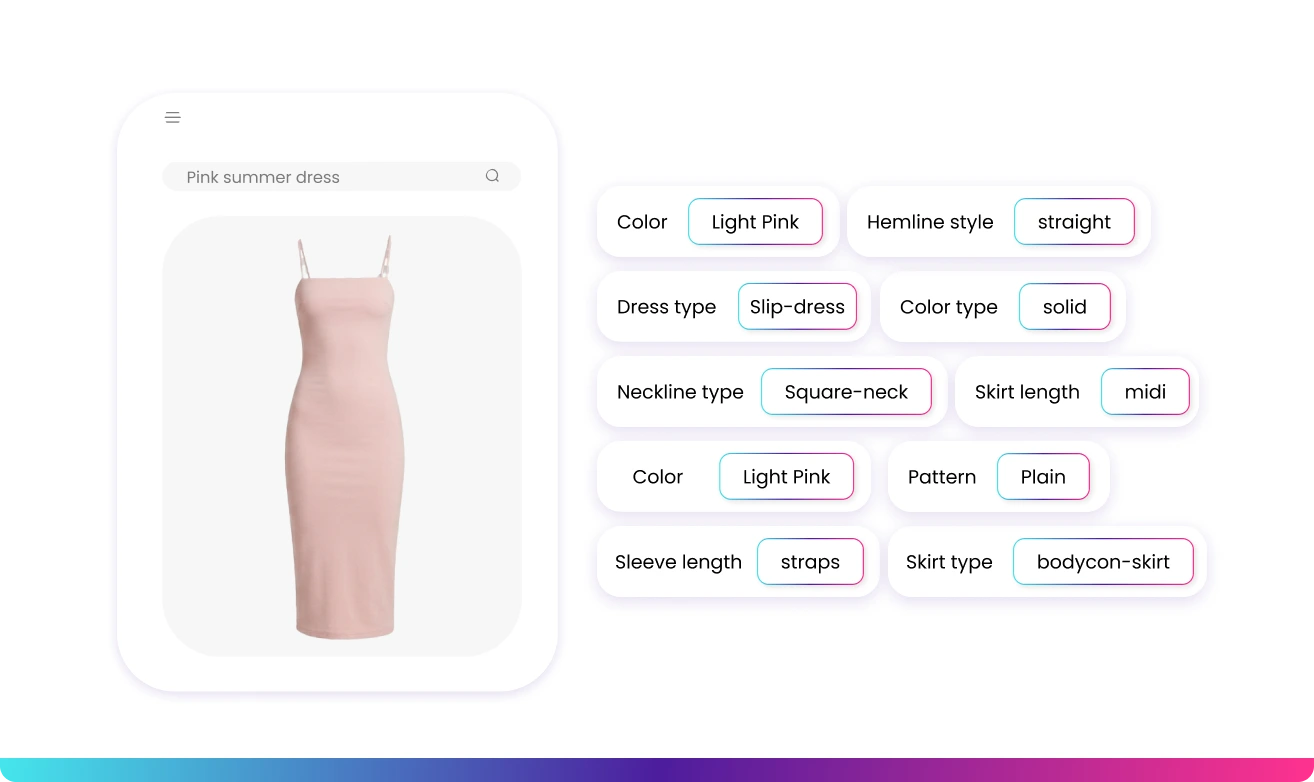
- Structured fashion product data such as material, fit, silhouette, length, sleeve, neckline, and color
- Semantic consistency across product titles, descriptions, and attributes
- Granular metadata aligned with real search behavior
- Clean inputs for SEO, GEO, filters, and AI-driven recommendations
Without this structure, even the strongest visuals remain invisible, resulting in poor rankings, missed demand, and underperforming assortments.
What Is Product Data Intelligence?
Product data intelligence is the missing layer between images and commerce.
It transforms unstructured visual inputs into machine-readable fashion product data that powers search, discovery, and conversion across eCommerce ecosystems.
With product data intelligence, brands can:
- Extract fashion attributes directly from images
- Standardize product data across channels and platforms
- Launch products faster with SEO- and AI-ready content
- Maintain consistency as catalogs scale
Product data intelligence allows machines to understand fashion at scale, powering better discovery, relevance, and customer experience across every channel.
How Product Data Intelligence Drives Search and Discoverability
Search today extends far beyond keywords. Algorithms evaluate structure, context, and semantic depth.
When shoppers search for queries like:
- “cropped leather jacket silver hardware”
- “oversized tailored blazer women”
- “sheer layered evening dress”
Platforms match those queries against machine-readable product data, not images.
Product data intelligence ensures that products are correctly interpreted, surfaced, and ranked across traditional search, onsite search, marketplaces, and AI-powered interfaces.
Without this layer, product visibility depends on fragmented, manual inputs that don’t scale or perform consistently.
Manual Product Data Creation Limits Growth
As catalogs grow and channels multiply, manual product data creation becomes a bottleneck.
Common outcomes include:
- Inconsistent product titles and descriptions
- Incomplete or inaccurate attribute coverage
- Delays in getting products live
- Limited visibility into catalog structure and depth
These inefficiencies directly impact discoverability, conversion, and revenue.
Pixyle.ai Enables Product Data Intelligence From Images & messy data
Pixyle.ai bridges the gap between images and commerce with AI-powered product data intelligence.
By analyzing product images, Pixyle.ai automatically generates:
- Structured, machine-readable fashion product data
- Granular attributes aligned with how customers search
- SEO-ready product titles and descriptions
- Intelligent tags and FAQs
- AI-discoverable content for search and recommendation systems
The result is a standardized, scalable product data foundation that supports every commerce channel.
Proven Impact of Product Data Intelligence
Pixyle.ai delivers measurable results in real commerce environments.
Otrium Increased Productivity by 90%
By automating fashion product tagging with Pixyle.ai, Otrium removed manual workflows and significantly improved speed, accuracy, and consistency across its catalog.
Thrifted Grew eBay Revenue 10x
Thrifted used Pixyle.ai’s AI-powered tagging and image moderation to transform product listings. Faster, higher-quality product data enabled stronger visibility and substantial revenue growth on marketplaces.
These outcomes show a clear link between machine-readable product data and commercial performance.
Turning Images Into Revenue With Product Data Intelligence
To unlock the full value of fashion imagery, brands should:
- Treat images as structured data inputs, not just visuals
- Convert visuals into machine-readable product data using AI
- Publish SEO- and AI-ready product content immediately
- Standardize product data across all channels
- Measure performance at the attribute level to continuously optimize
This approach ensures that inspiration translates into discoverability and sales.
Product Data Is the New Storefront
In an AI-driven commerce landscape, success depends on how well machines understand your products.
Pixyle AI gives you product data intelligence - the missing layer between images and commerce.
Don’t let high-value visuals remain invisible to algorithms.
Make your products searchable, discoverable, and scalable with Pixyle.ai.
Discover Pixyle Ultimate Dress type Taxonomy Guide
Learn how to structure your catalog in a way that matches how people actually shop.


Boost your sales with AI product tagging
Optimize your eCommerce catalog to improve discovery and conversions.
Related posts
Stay updated with our latest blog posts.