Bold Colours & Rich Fabrics: Why AI-Powered Product Content for Fashion Trends 2026 Is a Must-Have

Fashion trends for 2026 are defined by expression, texture, and visual richness. From bold patterns and layered silhouettes to statement accessories and deep, saturated tones, upcoming collections place a stronger emphasis on detail than ever before.
While this creative direction excites designers and consumers alike, it also introduces a growing challenge on the digital side of fashion: how to translate complex visual trends into product content that is searchable, discoverable, and scalable across channels.
As digital discovery becomes increasingly driven by attributes, context, and AI systems, product content is no longer a supporting element, it is foundational.
Fashion Trends 2026 and the Rising Complexity of Product Attributes
The 2026 fashion cycle brings together a wide range of stylistic elements, each carrying multiple layers of meaning:
- Polka Dots - classic yet playful motifs across blouses, dresses, and accessories
Attributes: polka dots, spotted print, retro dots, playful pattern
- Checkered Prints - structured patterns such as plaid and gingham used in tailoring and outerwear
Attributes: checkered, plaid, gingham, classic pattern
- Layered Outfits - multi-piece styling that combines garments, materials, and textures
Attributes: layered outfit, styling layers, mixed texture
- Brooches - decorative pins used as statement accents on coats, blazers, and bags
Attributes: brooch, decorative pin, statement accessory
- Preppy-Go-Lucky - a cheerful, modern reinterpretation of preppy style
Attributes: preppy style, cheerful fashion, classic meets fun
- Wedge Sneakers - footwear that blends sport functionality with elevated silhouettes
Attributes: wedge sneakers, sporty heels, elevated sneakers
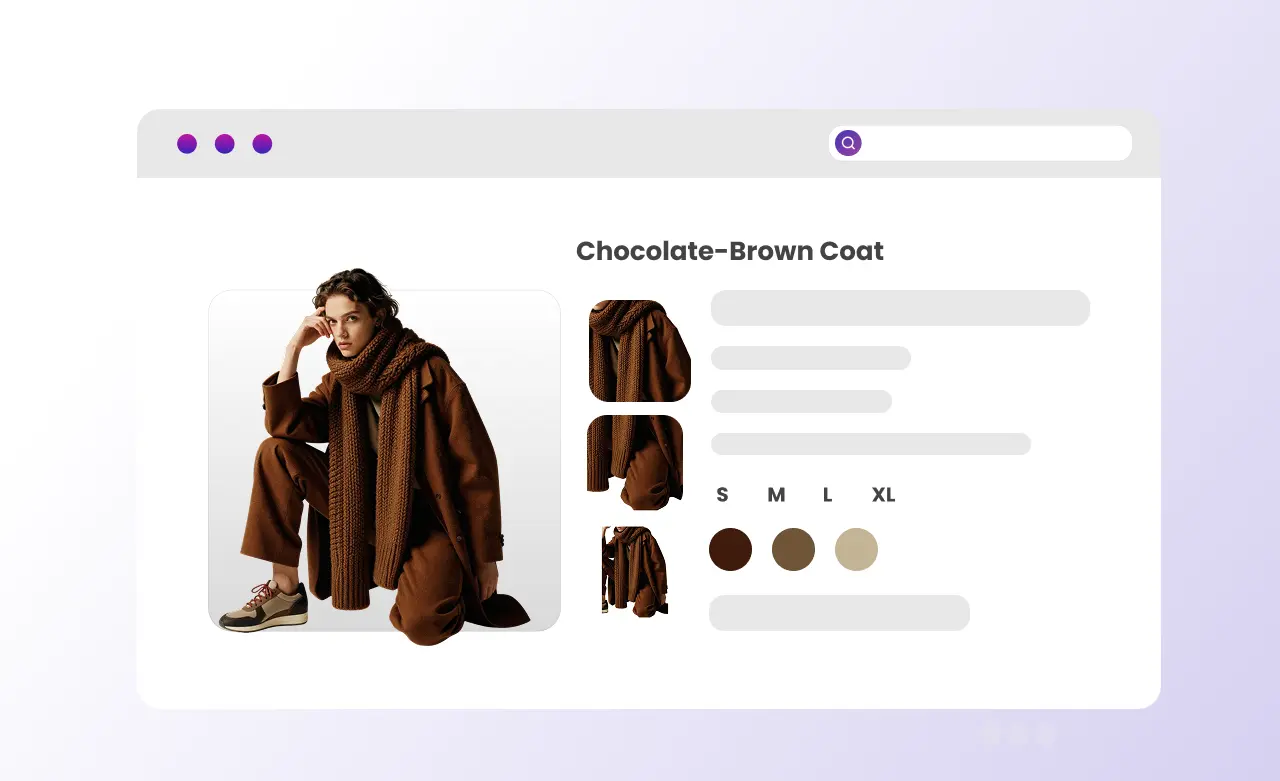
- Chocolate Brown - rich, warm neutrals dominating outerwear, footwear, and accessories
Attributes: chocolate brown, rich brown, warm neutrals
- Knit Scarves - chunky textures that add warmth and tactile depth
Attributes: knit scarf, chunky knit, cozy accessory
- Silk Scarves - smooth, luxurious fabrics used as refined style accents
Attributes: silk scarf, luxury accessory, smooth texture
- Cuteness - playful, youthful details and whimsical design elements
Attributes: cute style, playful details, whimsical fashion
Each of these trends introduces multiple product signals at once-pattern, color, texture, styling context, and mood. Capturing this level of detail consistently across growing catalogs dramatically increases the complexity of product data management.
Why Product Content Determines Discoverability in 2026
Product discovery is no longer driven solely by broad category searches. Shoppers increasingly search using descriptive, intent-rich language, such as “checkered blazer with brooch,” “layered outfit in chocolate brown,” or “silk scarf for preppy styling.”
Search engines, on-site search tools, marketplaces, and AI-powered recommendation systems rely on structured, attribute-level product data to surface relevant items. When attributes are missing, inconsistent, or delayed, even visually compelling products struggle to appear at the right moment.
As discovery becomes more visual and contextual, precise product content directly determines visibility.
From Manual Product Content to AI-Powered Tagging
Traditional product content workflows were built for a simpler fashion landscape. Manual data entry struggles to keep pace with:
- Rapid seasonal changes
- Expanding product catalogs
- Increasing expectations around accuracy and consistency
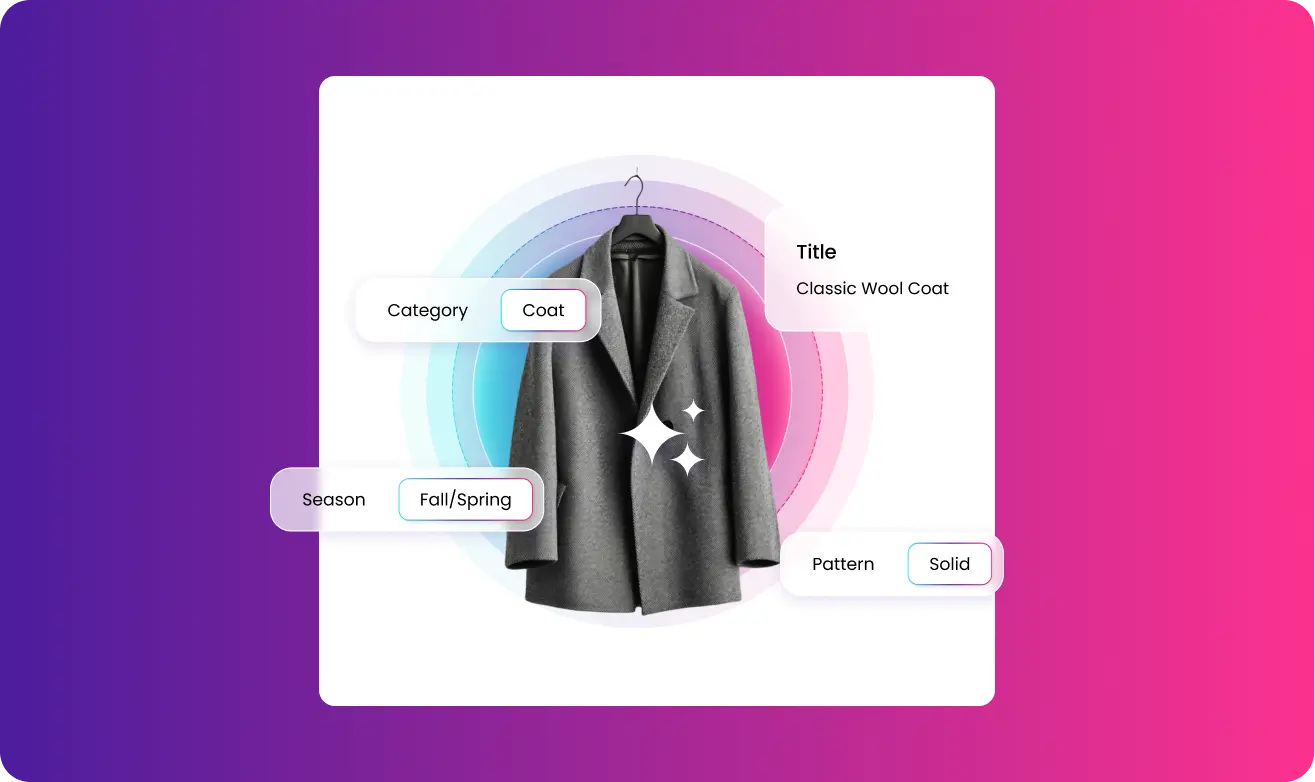
AI-powered tagging addresses this shift by analyzing product images directly and automatically identifying patterns, colors, materials, textures, and styling elements. This enables the creation of rich, structured product attributes at scale, without slowing down launches or increasing operational overhead.
Instead of describing products after the fact, product data is generated in parallel with creative output.
Turning Trend Complexity Into Search-Optimised Product Content
Pixyle.ai focuses on making product content discoverable exactly by the product design.
With generating product descriptions, tags, attributes, and FAQs directly from images, AI ensures that trend-specific details-such as polka dots, layered outfits, wedge sneakers, or silk versus knit textures, are consistently captured across entire catalogs.
This depth of product data supports:
- More accurate on-site search and filtering
- Improved SEO performance for long-tail and trend-driven queries
- Better alignment with marketplace and AI-driven discovery systems
- Consistency across ecommerce platforms and PIM environments
The result is product content that reflects fashion trends in a way digital systems can understand and surface.
Real-World Impact: Scaling Discovery and Speed
The value of AI-powered product content becomes especially clear in high-volume environments. In the case of Thrifted, improving product data quality and listing speed led to measurable performance gains. More structured, search-ready listings contributed to a tenfold increase in eBay revenue share, growing from 2.5% to 20%. At the same time, automation doubled listing efficiency from 60 to 120 products per hour, significantly reducing time-to-market and allowing products to reach buyers faster.
This demonstrates how scalable product content directly supports both discoverability and commercial performance.
Why Rich Product Attributes Improve the Entire Customer Journey
Detailed, accurate product attributes do more than improve search visibility. They shape expectations before purchase. When shoppers clearly understand fabric type, styling context, and design details, confidence increases and friction decreases.
As fashion becomes more expressive and layered, clarity in product content helps align perception with reality-supporting stronger engagement, higher conversion potential, and fewer post-purchase disappointments.
Preparing Product Content for the Future of Fashion Commerce
The fashion trends of 2026 highlight a broader shift: product content is no longer a manual task at the end of the workflow. It is the core infrastructure for modern fashion commerce.
As discovery becomes increasingly automated, visual, and AI-driven, brands that invest in intelligent product content systems are better positioned to adapt to rapid trend cycles, expanding catalogs, and evolving customer behavior.
AI-powered product content ensures that bold colours, rich fabrics, and layered styling are not only seen, but found.
Elevating What Matters
We are built around one central idea: ensuring products are easily discovered, clearly understood, and confidently chosen: by both people and AI systems. For the human shopper, this means delivering the context, inspiration, and reliable information that guide confident purchase decisions. For the AI agent, it means providing structured, machine-readable data that allows complex searches, recommendations, and criteria-based decisions to function seamlessly. In a fast-evolving fashion landscape, the true advantage comes from building product content that performs flawlessly for both audiences, rather than chasing every new technology trend.
Discover Pixyle Ultimate Dress type Taxonomy Guide
Learn how to structure your catalog in a way that matches how people actually shop.


Boost your sales with AI product tagging
Optimize your eCommerce catalog to improve discovery and conversions.
.webp)