Fashion Product Data Enrichment: From Raw Images to Rich Product Catalogs


Fashion Product Data Is the Foundation of Product Discovery
A fashion retailer can invest heavily in marketing, photography, and merchandising, but if shoppers cannot find products, those investments generate little return.
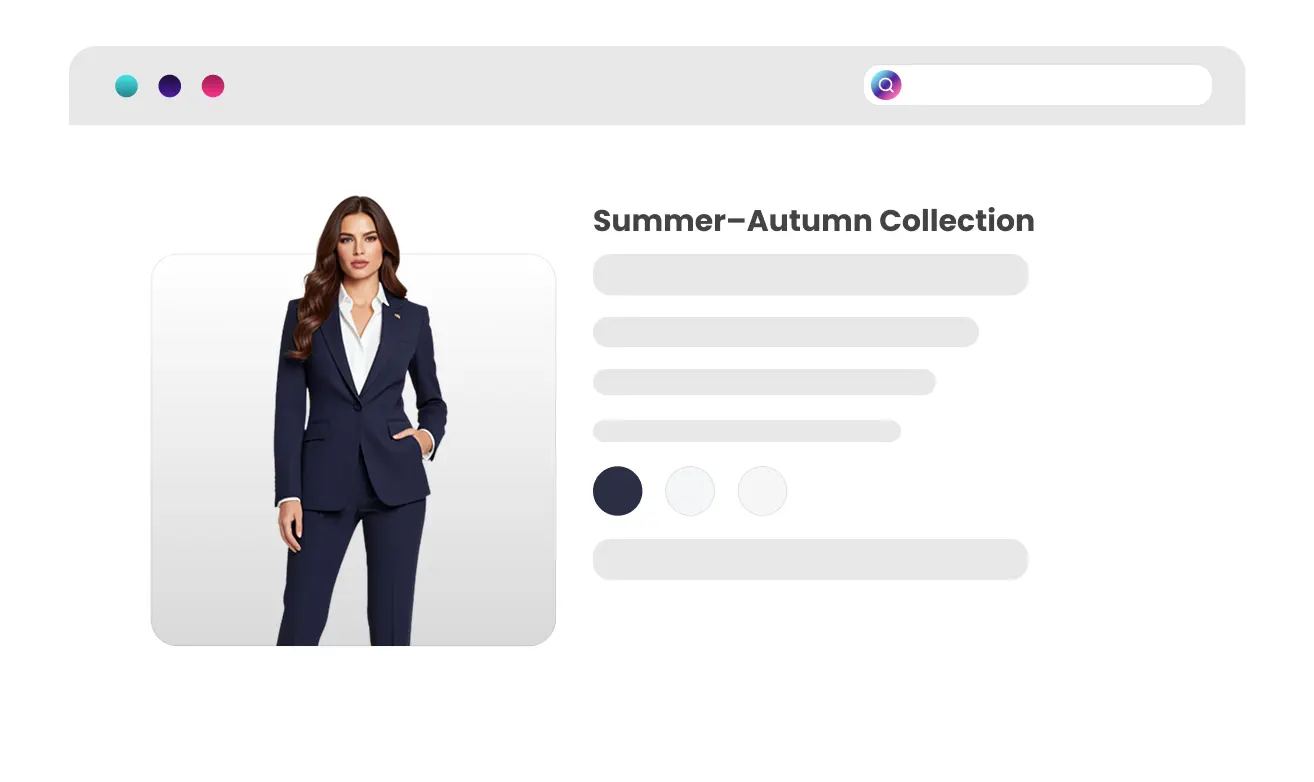
Today's customers search using detailed product attributes rather than broad categories. They look for "black linen wide-leg trousers," "oversized wool coat," or "floral puff-sleeve midi dress." To match these searches, retailers need structured, accurate, and comprehensive product data.
This is where fashion product data enrichment becomes essential.
Fashion product data enrichment transforms basic product information into rich, structured catalog data that improves product discovery, search relevance, filtering, recommendations, marketplace visibility, and AI-powered shopping experiences.
As ecommerce moves toward AI-driven discovery and shopping agents, enriched product data is becoming one of the most important competitive advantages for fashion retailers.
What Is Fashion Product Data Enrichment?
Fashion product data enrichment is the process of enhancing product listings with additional attributes, metadata, descriptions, taxonomy classifications, and search-friendly information.
The goal is simple: make products easier for both humans and machines to understand.
A typical fashion product listing often contains only the essentials: a product name, brand information, a handful of images, and a brief description. While this may be enough to publish a product online, it rarely provides the depth of information needed to support modern ecommerce experiences.
Through product data enrichment, that same listing can be transformed into a comprehensive product record. Additional information such as category, color, material, pattern, fit, silhouette, occasion, and style attributes can be automatically added and standardized. Enrichment can also generate optimized descriptions, searchable metadata, and marketplace-specific attributes that improve discoverability across channels.
The result is a richer, more structured catalog that helps customers find products more easily while enabling search engines, marketplaces, and AI-powered shopping systems to understand them more accurately.
Why Product Data Quality Matters More Than Ever
Fashion ecommerce has changed dramatically over the past few years.
Search engines are becoming more intelligent. Ecommerce platforms rely heavily on filtering and recommendations. AI shopping assistants are emerging as a new discovery channel. Marketplaces continue to increase their requirements for structured product information. At the same time, product catalogs are growing larger and more complex.
Many retailers now manage tens of thousands, or even millions, of products across multiple channels.
Without high-quality product data, several problems emerge:
- Products become difficult to find
- Filters produce poor results
- Search relevance declines
- Marketplace listings underperform
- Product recommendations become less accurate
- AI systems struggle to understand inventory
Rich product data helps solve all of these challenges.
The Hidden Cost of Poor Product Data
Many fashion retailers underestimate how much revenue is lost due to incomplete product information.
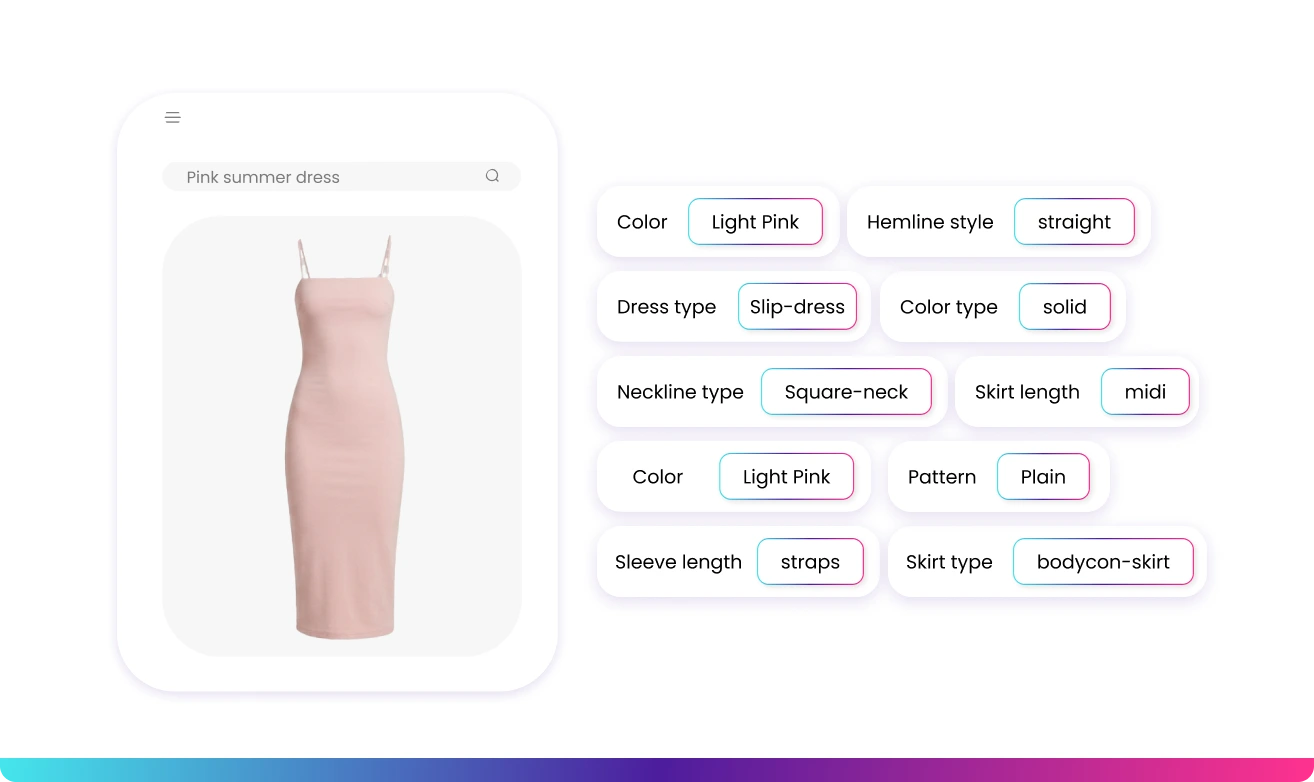
Consider a shopper searching for a "blue floral summer dress."
If a product listing does not include "blue" or "floral" as searchable attributes, the product may never appear, even if it is a perfect match.The same issue affects site search, product filters, recommendation engines, marketplace visibility, and AI-powered shopping experiences.
Poor product data creates invisible inventory. Products exist in the catalog but remain difficult for customers to discover.For large retailers, this can have a significant impact on revenue and conversion rates.
What Makes Product Data Rich?
Rich product data goes beyond basic product information. It provides the detailed context that modern ecommerce systems need to understand products accurately.
Product Attributes
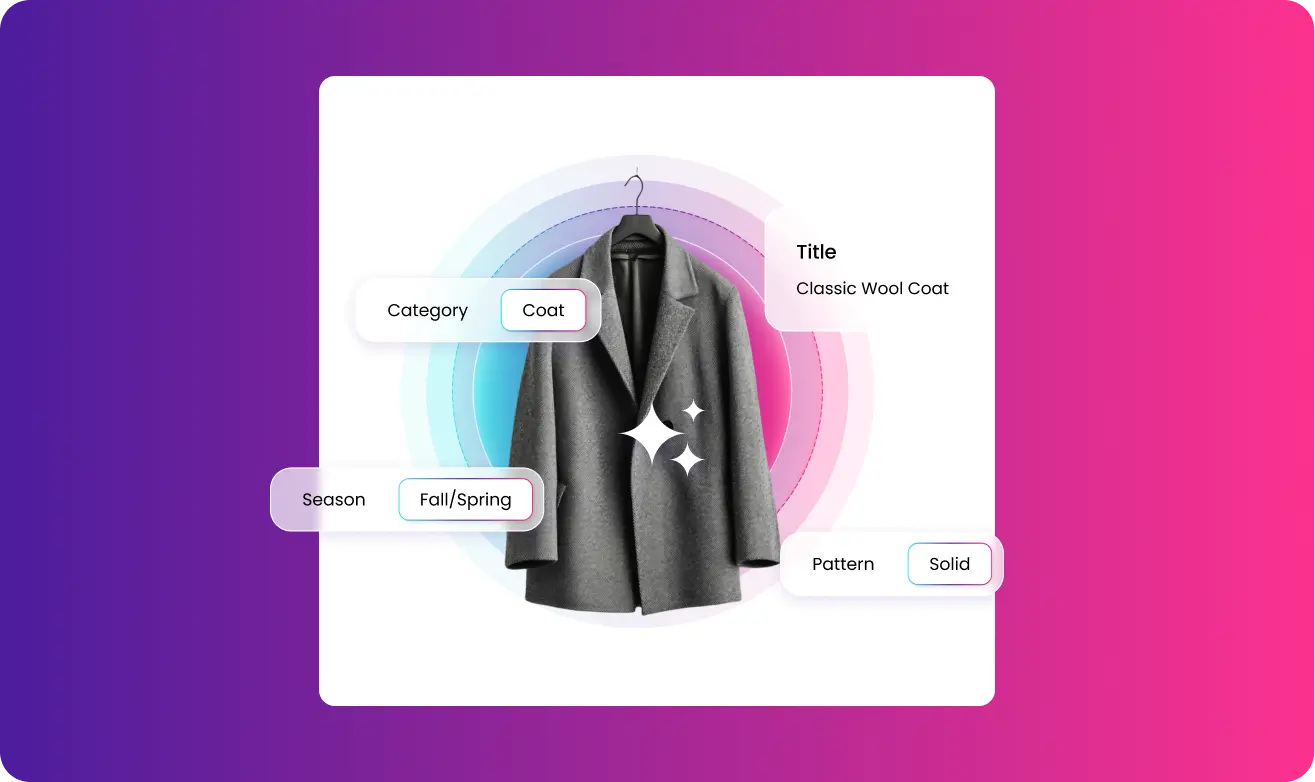
Attributes describe the characteristics of a product.Common fashion attributes include color, material, pattern, fit, silhouette, length, sleeve style, neckline, closure type, occasion, and seasonality, all of which help shoppers discover products more easily.
These attributes power search, filtering, recommendations, and merchandising.
Product Taxonomy
Taxonomy defines how products are organized within a catalog.
For example: Women → Dresses → Midi Dresses
A consistent taxonomy improves navigation and creates a better customer experience.
Product Descriptions
Rich descriptions help customers understand products while also supporting SEO efforts. Detailed descriptions provide valuable context about a product's style, materials, design elements, intended use, and fit, helping shoppers make more informed purchasing decisions.
Search Metadata
Additional tags and structured information improve product discoverability across channels. This metadata helps search engines, marketplaces, and AI systems understand products more effectively.
How AI Enriches Fashion Product Data
Traditionally, enrichment has been a manual process. Merchandising teams review product images, write descriptions, assign categories, and add attributes one product at a time. As catalogs grow, this process becomes increasingly difficult to scale.
Modern AI systems automate much of this work.
Step 1: Image Analysis
Computer vision models analyze product images to identify visual characteristics.
The AI can detect features such as:
- Product category
- Color
- Pattern
- Silhouette
- Fabric appearance
- Design details
Step 2: Attribute Extraction
Detected features are converted into structured product attributes.
For example:
An image of a dress might generate:
- Category: Midi Dress
- Color: Navy Blue
- Pattern: Floral
- Sleeve Type: Short Sleeve
- Fit: Regular Fit
Step 3: Taxonomy Mapping
The extracted attributes are mapped to a standardized fashion taxonomy. This creates consistency across the entire catalog.
Step 4: Content Generation
AI can generate:
- Product titles
- Product descriptions
- Search tags
- Alt text
- Marketplace content
This reduces manual workload while maintaining catalog quality.
Step 5: Catalog Optimization
The enriched data becomes available for:
- Search
- Filtering
- Recommendations
- Marketplace feeds
- Analytics
- AI shopping experiences
Benefits of Fashion Product Data Enrichment
Improved Product Discovery
Customers can find products more easily when catalogs contain detailed attributes. This improves both browsing and search experiences.
Better Search Relevance
Rich product information helps search engines understand exactly what products match a shopper's query. This leads to more accurate search results.
Stronger Product Filtering
Filters only work when products contain structured attributes. Data enrichment enables more useful filtering options across categories.
Faster Catalog Operations
AI-powered enrichment significantly reduces manual catalog management. Retailers can onboard new inventory faster while maintaining consistency.
Improved Marketplace Performance
Marketplaces increasingly reward complete product information. Enriched catalogs often achieve: better visibility, improved ranking and higher click-through rates.
Better Customer Experience
Shoppers receive more detailed information, making purchase decisions easier and reducing uncertainty.
Product Data Enrichment and AI Search
The rise of AI-powered search is creating new requirements for product data. AI systems do not simply match keywords. They attempt to understand products, attributes, and shopper intent. To do this effectively, they need structured, machine-readable information.
Enriched product data helps AI systems answer questions such as:
- What is this product?
- Who is it for?
- What style does it represent?
- What materials does it use?
- When should it be recommended?
As AI shopping assistants become more common, structured product data will play an increasingly important role in product visibility.
Common Product Data Challenges for Fashion Retailers
Many retailers struggle with:
Missing Attributes
Important product characteristics are often unavailable or incomplete.
Inconsistent Taxonomy
Different teams may classify similar products differently.
Duplicate Values
Multiple terms may describe the same attribute, creating inconsistency.
Manual Workflows
Large catalogs make manual enrichment difficult and expensive.
Scalability Issues
Catalog growth often outpaces the ability of teams to maintain product data quality.
AI-powered enrichment addresses these challenges by automating much of the process.
What to Look for in a Fashion Product Data Enrichment Platform
Not all enrichment solutions are built for fashion. When evaluating platforms, retailers should consider:
Fashion-Specific Expertise
Fashion products contain unique attributes that generic ecommerce tools often struggle to understand.
Image-First Understanding
The platform should be able to extract insights directly from product imagery.
Taxonomy Support
A strong fashion taxonomy improves consistency and discoverability.
Automation Capabilities
The platform should automate tagging, enrichment, and content generation.
Marketplace Readiness
Support for marketplace requirements can streamline multi-channel operations.
Scalability
The solution should support growth without increasing operational complexity.
The Future of Product Data in Fashion
Fashion ecommerce is moving toward a future where products must be understood not only by customers, but also by algorithms. Search engines, recommendation systems, marketplaces, and AI shopping assistants all depend on structured product information. As a result, product data is becoming a strategic asset rather than an operational necessity. Retailers that invest in rich, accurate, and scalable product data today will be better positioned to compete in tomorrow's AI-powered commerce landscape.
Conclusion
Fashion product data enrichment transforms basic product listings into rich, structured catalog assets that improve discoverability, search performance, customer experience, and operational efficiency. As catalogs grow larger and AI becomes increasingly important in eCommerce, the quality of product data will continue to influence how products are found, understood, and purchased. For fashion retailers looking to improve product discovery and prepare for the future of AI-powered commerce, product data enrichment is no longer optional, it is foundational.
Discover Pixyle Ultimate Dress type Taxonomy Guide
Learn how to structure your catalog in a way that matches how people actually shop.


Boost your sales with AI product tagging
Optimize your eCommerce catalog to improve discovery and conversions.
Related posts
Stay updated with our latest blog posts.