Why Product Data Quality Has Become a Competitive Advantage
Every product in a fashion catalog tells a story, but only if customers, search engines, marketplaces, and AI systems can understand it.
Product data has traditionally been viewed as an operational necessity. Retailers focused on collecting the minimum information required to publish products online: a title, a description, a few images, and basic specifications. While this approach may have been sufficient a decade ago, today's eCommerce landscape demands much more.
Modern shoppers expect highly personalised search results, accurate product recommendations, intuitive filtering, and detailed product information. At the same time, search engines, marketplaces, and AI-powered shopping assistants rely on structured product data to interpret products and surface them to the right audience.
Without complete and consistent product data, even exceptional products can remain virtually invisible. Poor product data doesn't just create operational inefficiencies, it directly affects discoverability, customer experience, conversion rates, and revenue.
What Is Poor Product Data?
Poor product data refers to incomplete, inconsistent, outdated, or inaccurate information associated with a product.
This may include missing attributes, inconsistent naming conventions, vague descriptions, incorrect categorisation, duplicate values, or incomplete metadata. While these issues may appear minor individually, their combined impact can significantly reduce the performance of an eCommerce catalog.
For fashion retailers, the challenge is even greater.
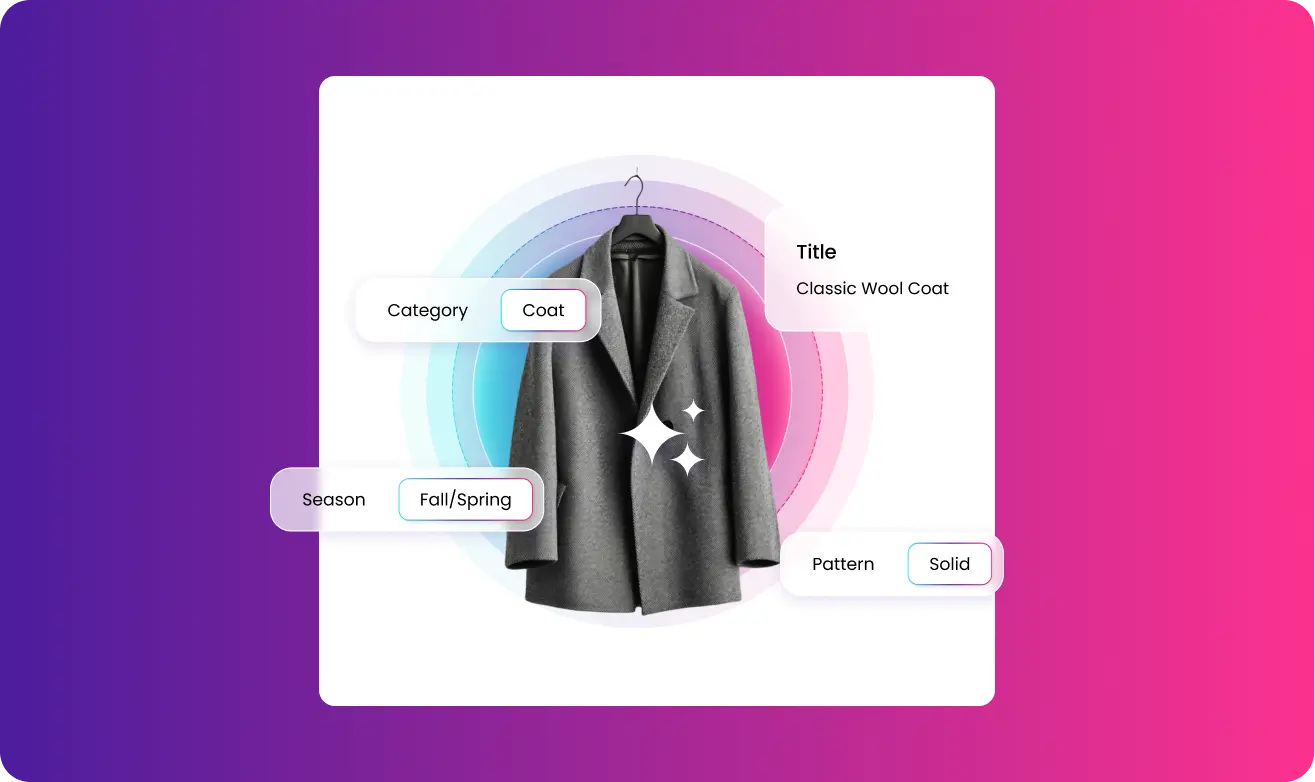
Unlike many other industries, fashion products contain dozens of visual and descriptive characteristics. A single garment may need to be identified by its color, material, silhouette, fit, neckline, sleeve style, pattern, length, occasion, season, and many other attributes. If these details are missing or inconsistent, products become increasingly difficult to discover.
The Business Cost of Poor Product Data
Poor product data isn't simply a merchandising issue, it's a business issue that affects every stage of the customer journey. From the moment a product is added to a catalog, its quality determines how effectively it can be discovered, understood, recommended, and ultimately purchased.
Let's explore some of the hidden costs.
Reduced Product Discoverability
Customers rarely browse an entire online catalog. Instead, they search using detailed descriptions that reflect exactly what they're looking for.
A shopper might search for:
"Black linen wide-leg trousers."
Another might look for:
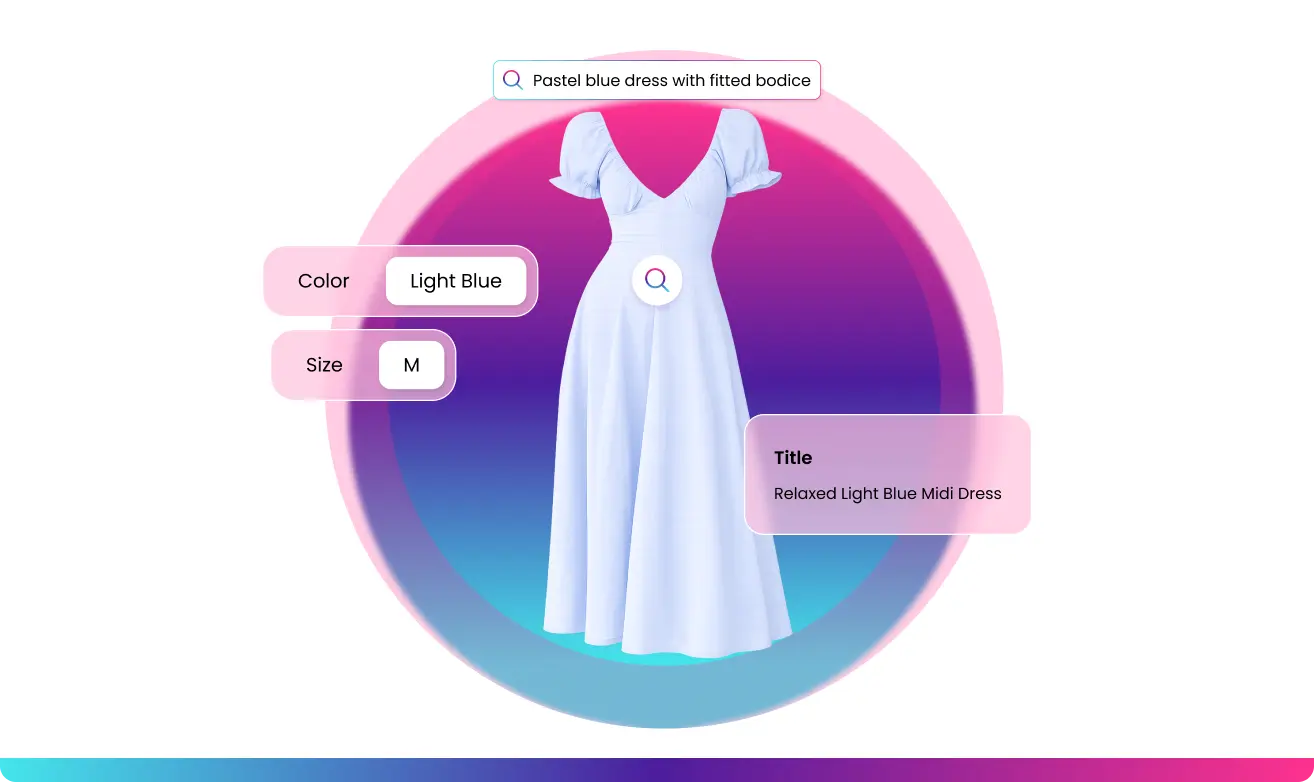
"Floral midi dress with puff sleeves."
If those product attributes don't exist in the catalog, the products may never appear in the results, even if they are the perfect match. The same challenge extends to site search, product filtering, recommendation engines, marketplace visibility, and AI-powered shopping experiences. Every missing attribute reduces the likelihood that a product will be discovered.
This is why AI product tagging has become such an important capability for modern fashion retailers. Automatically identifying and assigning detailed attributes ensures products are represented accurately and consistently across the catalog.
Lower Search Visibility
Search engines have become increasingly sophisticated, but they still depend on structured information to understand a product. Detailed titles, descriptive copy, structured attributes, and consistent taxonomy all contribute to stronger search visibility.
When product data is incomplete, search engines have fewer signals to understand what a product is, who it is intended for, and which search queries it should rank for. As a result, retailers miss valuable opportunities to appear in highly relevant long-tail searches, precisely the types of searches that often lead to higher conversion rates. Rich, structured product data doesn't just improve onsite search; it also strengthens organic search performance by giving search engines the context they need to index products accurately.
A Poorer Customer Experience
Today's shoppers expect to find products quickly and effortlessly.
When product information is incomplete, that experience begins to break down. Filters return inconsistent results. Product recommendations become less relevant. Descriptions leave important questions unanswered. Customers spend more time searching and less time buying. Every unnecessary step increases the likelihood that shoppers will leave without making a purchase. Strong product data creates a smoother shopping experience by helping customers find the right products faster and with greater confidence.
Operational Inefficiencies That Scale with Growth
As fashion retailers expand their catalogs, maintaining high-quality product data becomes increasingly complex. Many merchandising teams still rely on manual workflows to classify products, assign attributes, write descriptions, and prepare marketplace listings. While manageable for a few hundred products, these processes quickly become time-consuming and difficult to scale as catalogs grow into the tens or hundreds of thousands of SKUs. The result is a cycle of repetitive manual work, inconsistent data, delayed product launches, and increasing operational costs. Rather than spending time enriching product information manually, teams should be focused on strategic merchandising and customer experience. This is where fashion product data enrichment enables retailers to automate repetitive tasks while maintaining consistent, high-quality catalog data.
Building a Stronger Foundation for AI-Driven Commerce
Poor product data impacts every stage of the eCommerce journey, from product discovery and onsite search to SEO, customer experience, and AI-powered shopping. Pixyle AI helps fashion brands solve this by acting as a visual product data intelligence layer, transforming product images and existing inputs into rich, structured, machine-readable product data. Unlike traditional PIM systems that store information, Pixyle AI generates the product intelligence needed to enrich catalogs, improve discoverability, automate merchandising workflows, and prepare product data for AI-driven commerce. As shopping increasingly shifts toward AI-powered search and machine-mediated discovery, high-quality product data is no longer just a catalog requirement, it's a competitive advantage.
Discover Pixyle Ultimate Dress type Taxonomy Guide
Learn how to structure your catalog in a way that matches how people actually shop.


Boost your sales with AI product tagging
Optimize your eCommerce catalog to improve discovery and conversions.

.webp)