Multi-Brand Product Data: How to Standardize Supplier Data Without Starting Over

Managing product data is relatively straightforward when every product comes from one brand, follows one taxonomy, and uses the same terminology.It becomes a very different challenge when a retailer manages products from dozens or hundreds of brands.
One supplier might describe a product as a “relaxed-fit cotton shirt.” Another might call it a “loose-fit button-down.” A third might provide only “cotton shirt.” Suppliers can also use different category structures, attribute names, color terminology, and formatting conventions. To a person, these differences are easy to understand. To an eCommerce system, they can create inconsistencies across the catalog.
This is where product data standardization becomes important. It means bringing product information from different suppliers into a consistent taxonomy, attribute structure, and terminology so it can work reliably across the retail ecosystem.
The goal isn't to make every supplier change the way they work. It's to create a common framework that allows different sources to work together.
Every Brand Has Its Own Product Language
Fashion brands have their own ways of describing products.
One brand may use “navy,” another “dark blue,” and another “midnight blue.” One may classify a garment as a “midi dress,” while another uses “mid-length dress.” A supplier might describe a fit as “relaxed,” while another uses “loose” or “oversized.”
These differences make sense within each brand's own product language. The challenge appears when all of that information enters the same retail environment.
Search, filters, recommendations, merchandising, and product feeds all depend on product information being understood consistently. Without normalization, the same characteristic can exist under several names, or not exist at all.
Why Supplier Data Is Difficult to Standardize
When retailers talk about cleaning supplier data, the first instinct is often to think about spreadsheets: correcting values, fixing formatting, removing duplicates, and filling empty cells. Those tasks matter, but standardization goes further.
A retailer needs to define the product information it actually wants to manage and create a common structure that supplier data can be mapped into. A retailer may want every dress to include category, color, pattern, material, fit, length, sleeve type, and neckline.
One supplier might provide most of this information. Another might provide only a few fields. A third might describe the same characteristics using completely different terminology.
The challenge is not simply cleaning the data. It is bringing different sources into the same product data model.
When the Information Is Missing
Standardization becomes even harder when suppliers don't provide the information a retailer needs.
A product feed might contain a name, category, price, and a few basic attributes while leaving out details such as pattern, silhouette, sleeve length, neckline, or fit. In fashion, some of this information may be visible in the product image rather than included in the supplier feed.
A retailer might receive an image of a floral midi dress with short sleeves and a V-neck, while the supplier provides only a generic product name and category.
There is nothing to normalize if the information isn't there in the first place. This is where product data enrichment becomes part of the standardization process.
Where Visual AI Fits
AI can help retailers identify product characteristics that are missing or inconsistent across supplier data.
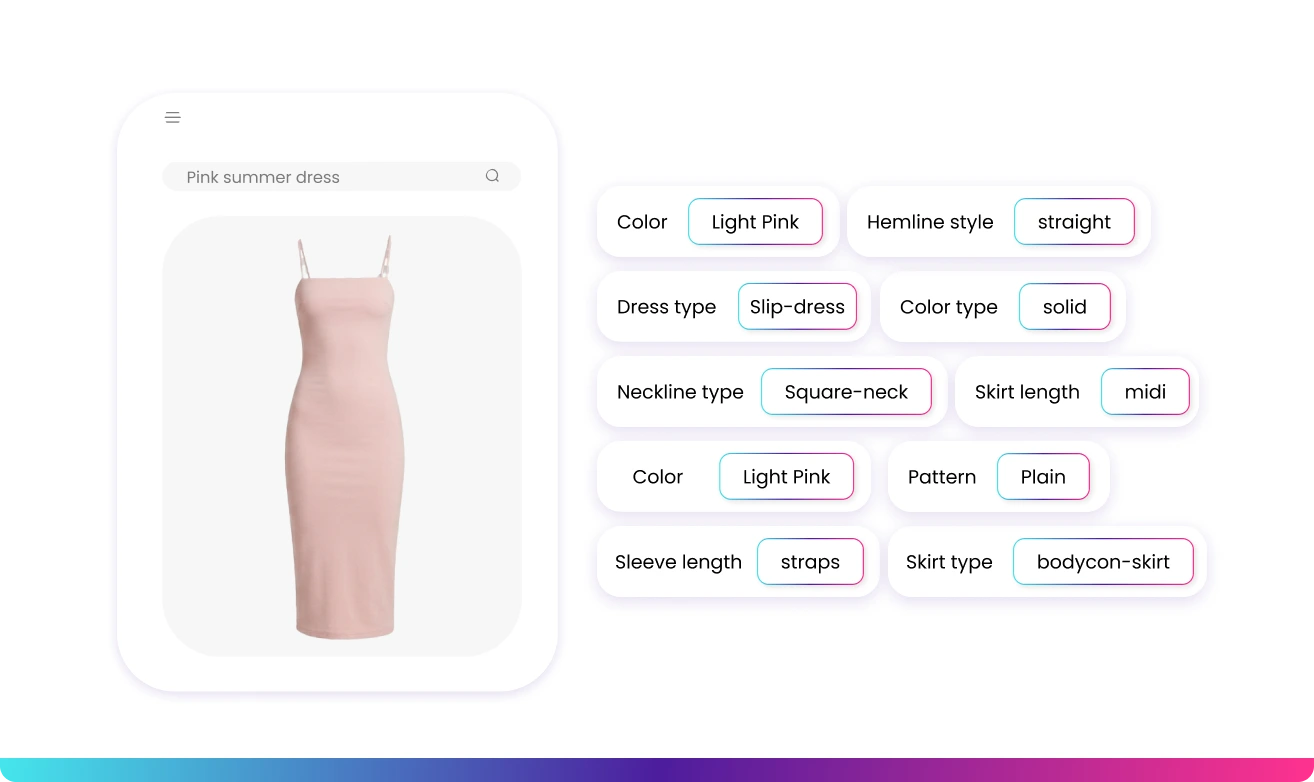
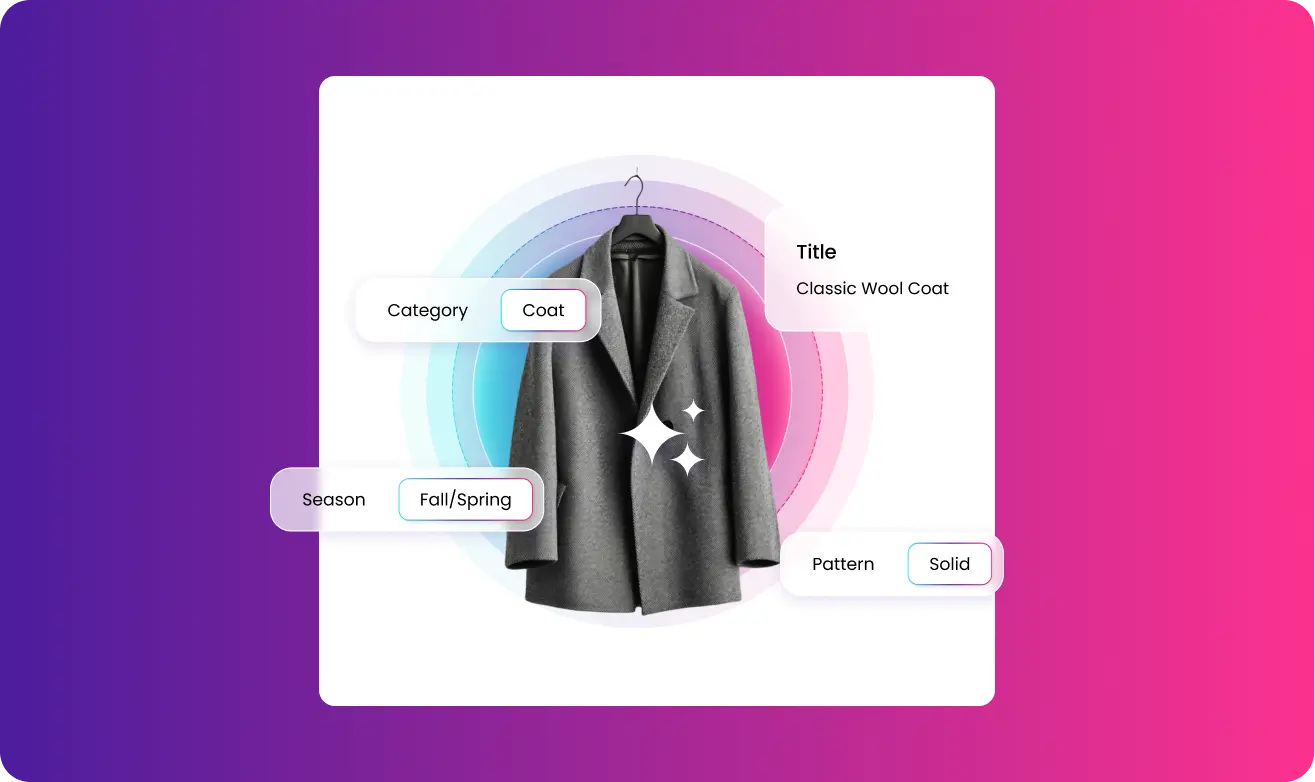
For fashion, visual AI is particularly useful because product images contain information that may not be explicitly provided in a feed. AI can identify characteristics such as category, color, pattern, silhouette, fit, sleeve type, neckline, and other visual attributes.
That information can then be mapped to the retailer's existing taxonomy and attribute structure. The important point is that AI doesn't need to replace the retailer's product data model. The retailer defines the structure and terminology; AI helps apply it consistently across incoming product information.
This is the role of a Product Data Intelligence Layer: using AI to understand and enrich product information while working alongside the systems that already manage the catalog.
Standardization Should Work With the Existing Stack
Retailers already have systems in place to manage and distribute product information, including PIMs, DAMs, ecommerce platforms, search solutions, ERP systems, and marketplace feeds.
Product data standardization shouldn't require replacing them.
Instead, supplier information can be analyzed, mapped, and enriched before flowing into the systems that already manage the catalog. This makes it possible to improve product data without creating another isolated system or asking every supplier to adopt the same workflow. Retailers can also start where the impact is greatest, such as suppliers or categories with the largest gaps, and expand the process over time.
The Result: A Catalog That Can Scale
The value of standardization becomes clearer as the number of products and suppliers grows.
Imagine a retailer working with 100 brands. Without a common model, every supplier introduces another set of category names, attribute values, and content conventions for the retailer to manage. With a shared framework, supplier information can be translated into a common product language without making every brand provide its data in exactly the same format.
The product descriptions can remain brand-specific. What changes is the consistency of the underlying product information used by search, filters, recommendations, feeds, and other systems.
What This Looks Like in Practice
This challenge also appears in marketplaces and user-generated listings, where the information available for each product can vary significantly.
Yaga, a secondhand fashion marketplace, had listings with inconsistent or missing information such as category, color, material, pattern, fit, sleeve length, and style. Using AI-powered product tagging, Yaga enriched listings from product images without relying entirely on sellers to provide every attribute manually.
The implementation took five days and resulted in approximately a 6% increase in search CTR, while users needed around 5% fewer searches to find relevant products. The broader lesson is that useful and consistent product information can be created even when the original source data is incomplete.
The Goal Isn't to Start Over
Multi-brand product data doesn't need to become a replatforming project.
Retailers already have their systems, taxonomies, supplier relationships, and workflows. The opportunity is to make the information moving through those systems more consistent and useful. Start with a clear product data model, identify where supplier information falls short, and use automation and AI where they can reduce the manual work of mapping and enrichment.
For multi-brand retailers, the goal of product data standardization is simple: not making every source identical, but making different sources work together.
Discover Pixyle Ultimate Dress type Taxonomy Guide
Learn how to structure your catalog in a way that matches how people actually shop.


Boost your sales with AI product tagging
Optimize your eCommerce catalog to improve discovery and conversions.
Related posts
Stay updated with our latest blog posts.
.webp)