Product Attribute Coverage: The KPI Fashion Retailers Are Missing

Why measuring product attribute coverage matters for catalog quality, product discovery, eCommerce performance, and AI-powered commerce.
Fashion retailers know product data matters. The harder question is knowing how complete that data really is.
A catalog can contain hundreds of thousands of products and still have significant gaps. One product may include detailed information about colour, material, fit, and style, while another has little more than a product name, description, and image.
Individually, these gaps may seem minor. Across a large catalog, they can affect how products are searched, filtered, categorized, recommended, and understood by increasingly AI-driven ecommerce systems. So instead of asking whether a catalog contains product data, retailers should ask a more useful question:
How much of the information needed to understand each product is actually available? That is where product attribute coverage becomes an important KPI.
What Is Product Attribute Coverage?
Product attribute coverage measures how consistently the important attributes of a product are populated across a catalog. For a fashion retailer, those attributes might include colour, material, pattern, fit, length, sleeve type, neckline, occasion, and style.
But the goal isn't to give every product the maximum possible number of attributes. A dress, a pair of trainers, and a winter coat require different information. What matters is defining the attributes that are meaningful for each category and making sure those attributes are consistently available. This makes attribute coverage a practical way to identify where a catalog is strong and where important information is missing.
Why Fashion Needs More Than Basic Product Information
Fashion products are rarely defined by their category alone.
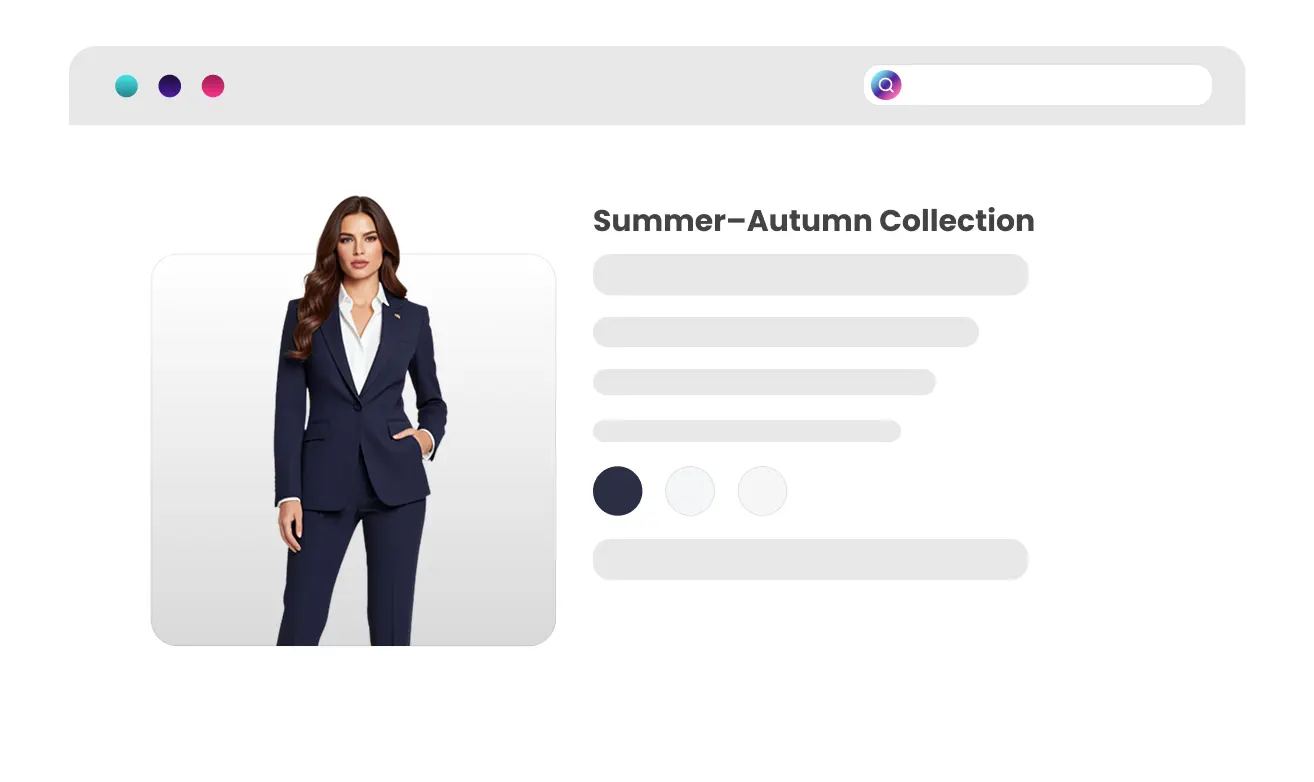
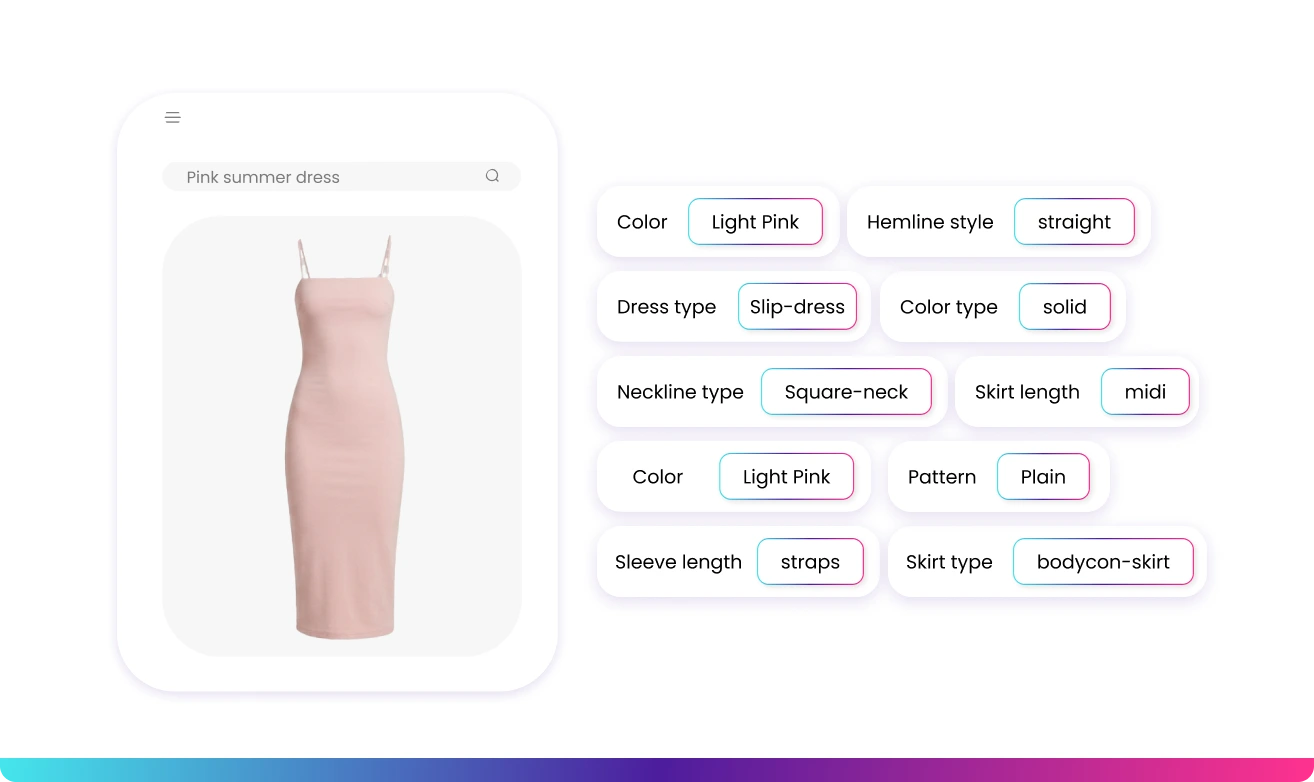
A shopper may be looking for a black linen dress, an oversized wool coat, or a cropped leather jacket with a relaxed fit. Each search combines several characteristics that help define what the shopper actually wants. Colour, material, silhouette, fit, length, pattern, neckline, sleeve type, and occasion can all contribute to that understanding.
This is also why fashion product data is particularly difficult to standardise. Much of this information may not arrive as structured data in the first place. It may be included in a supplier description, buried in free-text content, or visible only in the product image.
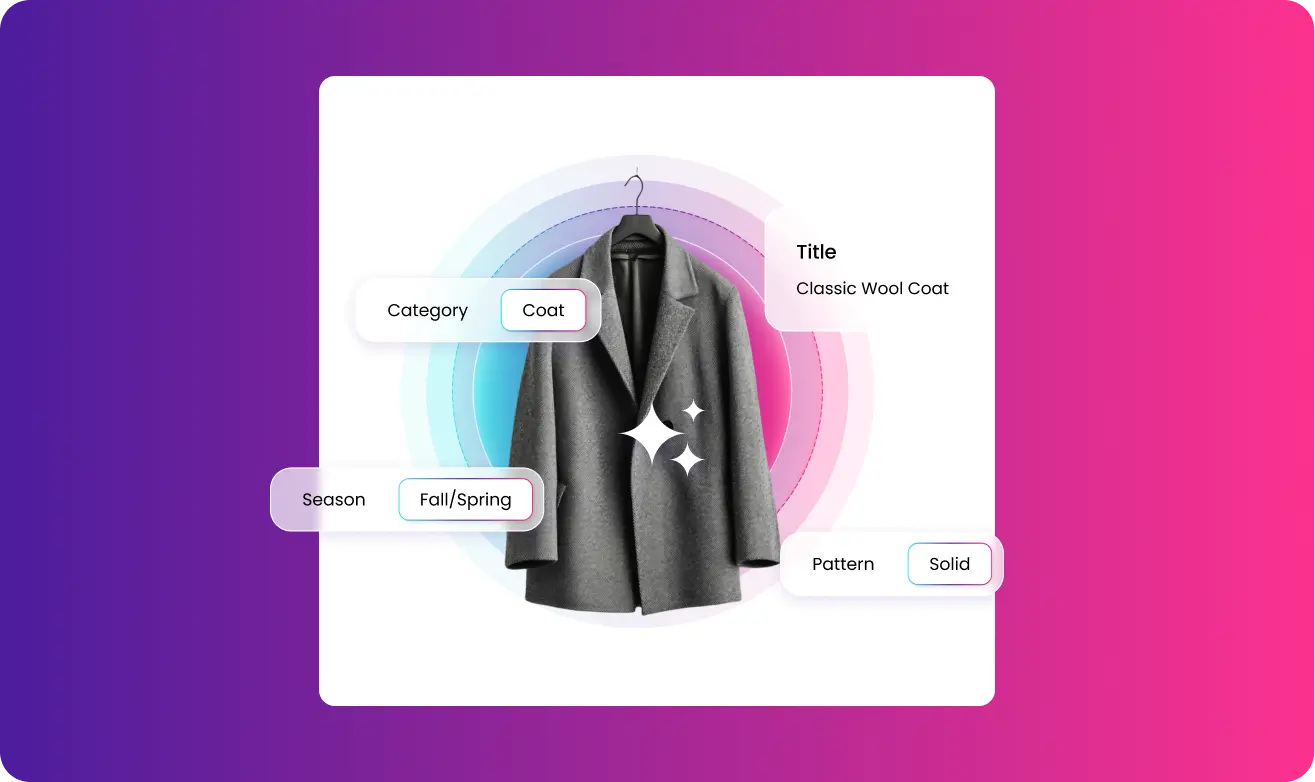
Pixyle.ai's AI Product Tagging is designed to identify granular fashion attributes such as category, colour, material, pattern, fit, silhouette, neckline, sleeve type, occasion, and season from product imagery.
Where Product Attribute Gaps Come From
Product data usually comes from multiple sources.
Suppliers provide their own information. Merchandising teams add or modify attributes. Product images contain additional visual information. Legacy catalogs bring older structures into the mix. User-generated listings introduce another level of variability.
As a result, two products in the same catalog can contain very different levels of detail. One supplier may provide a complete set of attributes, while another provides only basic information. A product description may mention the material but not the fit. An image may clearly show a pattern that has never been added to the product record.
Someone then has to identify these gaps, interpret the available information, and map it to the retailer's taxonomy. At a small scale, this can be handled manually. At enterprise scale, it becomes an ongoing operational challenge.
Your Product Images Already Contain Valuable Information
One of the most overlooked sources of product information is already sitting inside the catalog: the product image.
A fashion image can provide visual signals about the garment's colour, pattern, silhouette, neckline, sleeve type, fit, and other characteristics. Traditionally, extracting those details required people to review images and enter the information manually.
Visual AI can automate much of that work. Pixyle.ai's Product Data Intelligence platform uses visual AI to turn product imagery into structured product information. Its Data Foundations Suite supports product attribute generation alongside titles, descriptions, taxonomy, and other catalog enrichment workflows.
This gives retailers a way to capture information that may already exist in their imagery but is missing from their structured catalog data.
More Attributes Don't Always Mean Better Product Data
There is an important distinction between having more attributes and having better product data. A retailer could populate hundreds of fields and still have a difficult catalog to manage if the values are inconsistent.
For example, one product might use "navy," another "dark blue," and another "midnight." The information is technically present, but the values aren't standardised.
The same issue can occur with material, fit, style, or category. That is why attribute coverage needs to be considered alongside taxonomy and standardisation. The objective is not to generate as much information as possible. It is to create consistent information that systems can actually use. Pixyle.ai's fashion-specific approach is built around granular attributes and taxonomy rather than generic image labels, helping turn visual product information into structured data suitable for eCommerce workflows.
From Better Catalog Data to Better Product Discovery
The value of product attributes becomes clearer when you look at what happens downstream. Search systems need information to match products with shopper intent. Filters need consistent values to return the right products. Recommendations need meaningful product characteristics to understand similarities.
And AI-powered shopping experiences need detailed product context to interpret increasingly specific queries. Consider a shopper searching for a "long black evening dress." The product title might not contain those exact words. The relevant information could be distributed across attributes such as colour, length, category, occasion, silhouette, and style.
Pixyle.ai's Discovery Engine is designed around this type of granular product understanding, using structured attributes and shopper-oriented terminology to support product discovery and search relevance. This is why attribute coverage shouldn't be viewed purely as a catalog-management metric. It can influence how effectively a retailer's digital experiences understand what it sells.
Enrichment Should Fit Into the Systems Retailers Already Use
Most enterprise fashion retailers already have a technology stack in place. Their PIM manages product information. Their DAM manages assets. Their eCommerce platform powers the storefront. Search technology handles discovery. They don't necessarily need another system to replace these tools. They need a way to improve the information flowing through them.
Pixyle.ai is positioned as a Product Data Intelligence Layer that works alongside existing eCommerce architecture. Enriched product information can be connected to existing systems through integrations and APIs rather than requiring retailers to rebuild their stack.
This is particularly relevant for retailers evaluating data enrichment tools that integrate with existing eCommerce systems. The value of enrichment isn't creating another isolated product database. It is improving the quality of the data that existing systems already depend on.
How Should Retailers Measure Attribute Coverage?
There isn't one percentage that makes sense for every retailer. The right benchmark depends on the product categories, taxonomy, customer experience, and use cases.
The first step is to define which attributes are essential for each category. For dresses, that could mean colour, material, pattern, fit, length, neckline, and sleeve type. For footwear, the required set would be different. Once those requirements are established, retailers can measure how consistently the attributes are populated across the catalog. The more useful analysis comes from breaking that measurement down.
Which categories have the largest gaps? Which attributes are most frequently missing? Are certain suppliers consistently providing less information? Are older products less complete than newer products? Are the same attributes represented differently across collections?
These questions turn product data quality into something eCommerce and merchandising teams can act on.
Coverage Needs to Keep Up With the Catalog
A catalog is never finished. New collections arrive. New products are added. Suppliers change. Taxonomies evolve. New channels introduce new requirements. That means attribute coverage can decline even after a retailer has completed a major enrichment project. Automation makes it possible to apply the same enrichment approach as the catalog continues to grow. Pixyle.ai's Data Foundations Suite is designed for ongoing catalog enrichment, including attributes, titles, descriptions, taxonomy, and other product information at scale.
The objective is to make product data quality repeatable rather than dependent on constant manual effort.
What Product Attribute Coverage Looks Like in Practice: Yaga
A real example shows why this matters.
Yaga, a fast-growing second-hand fashion marketplace, had a growing catalog of user-generated listings. Many listings lacked important information such as category, colour, material, pattern, fit, sleeve length, and style. For a marketplace where product discovery is central to the customer experience, incomplete information created friction.
Yaga needed a scalable way to enrich listings without putting the responsibility entirely on sellers. Yaga partnered with Pixyle.ai to use AI-powered product tagging. Pixyle's visual AI analysed uploaded product images and generated structured fashion attributes, allowing product imagery to supplement information that sellers had not provided.
The implementation took just five days. The results were measurable: Yaga saw approximately a 6% increase in search click-through rate, while users needed around 5% fewer searches to find relevant products. At the same time, monthly listings in South Africa grew from approximately 300,000 to 600,000.
The important takeaway is not simply that Yaga added more product attributes. It is that better product information supported a better product discovery experience while the catalog continued to scale.
Read the full Yaga × Pixyle.ai case study.
Product Attribute Coverage Is a Starting Point, Not the End Goal
Product attribute coverage won't tell a retailer everything about its catalog. But it can reveal where important information is missing and help teams understand whether their product data is ready to support the experiences built on top of it. For fashion retailers, that matters more as search becomes more sophisticated and AI starts playing a larger role in how shoppers discover products.
The goal isn't to create the longest product record.
It's to make sure the right information is available, consistent, and usable. Because when digital systems have a clearer understanding of the products a retailer sells, they have a stronger foundation for helping shoppers discover them. And that is ultimately what better product data should achieve.
Discover Pixyle Ultimate Dress type Taxonomy Guide
Learn how to structure your catalog in a way that matches how people actually shop.


Boost your sales with AI product tagging
Optimize your eCommerce catalog to improve discovery and conversions.
Related posts
Stay updated with our latest blog posts.